Key facts
- More than 100 factories suspended operations in Ashulia on November 5, police superintendent Mohammad Mominul Islam Bhuiyan said.
- The wage board agreed on Wednesday to a revised wage structure from December but has not set the size of the increase.
- Workers want the minimum monthly wage more than doubled to 30,000 taka ($241.55) from 12,500 taka.
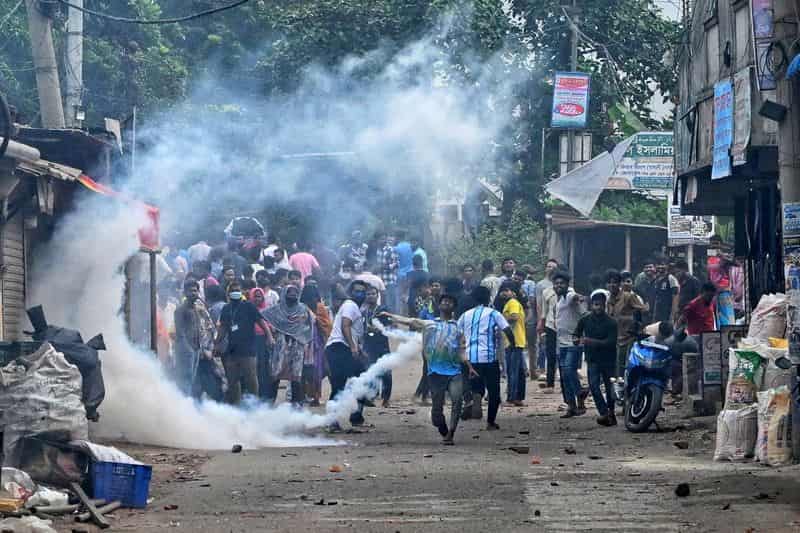
- Police used tear gas and sound grenades after protesters threw bricks and vandalised police vehicles, Bhuiyan said.
- The garment sector employs about 4 million workers and generates more than 80% of Bangladesh's export earnings.
Garment workers staged fresh protests in Bangladesh on November 5, forcing factories to suspend operations despite a wage board move to introduce a revised pay structure from December. The protests began on Saturday and have forced the closure of hundreds of factories, disrupting production in the world's second-largest garment exporter after China.
Workers initially reported to work early on November 5 in Ashulia, a major garment manufacturing hub on the outskirts of Dhaka. They later walked out and blocked a major highway, demanding a clear announcement on the proposed wage increase.
"We had to use tear gas and sound grenades after protesters threw bricks at police and vandalised police vehicles," Ashulia Industrial Police Superintendent Mohammad Mominul Islam Bhuiyan said. More than 100 factories suspended operations in the area on November 5, he said, adding that additional police and Border Guard Bangladesh personnel had been deployed across the industrial zone.
The situation was relatively calm in other industrial hubs, including Savar and Gazipur, where many workers returned to their jobs, though some factories remained temporarily closed. Authorities urged factory employees to return to work as security forces remained on high alert across major industrial zones.
The wage board agreed on Wednesday to implement a revised wage structure from December, with workers set to receive their first pay under the new scale in January. It has yet to determine the size of the increase. Workers are demanding that the minimum monthly wage be more than doubled to 30,000 taka ($241.55) from 12,500 taka, saying rising food, housing and transport costs have eroded their purchasing power.
"The prices of everything have gone up, but wages have not. It is becoming harder and harder to make ends meet," said Shilpi Khatun, a garment worker who did not join the November 5 protest.
Low wages and duty-free access to key Western markets helped fuel the growth of Bangladesh's garment industry, which generates more than 80% of the South Asian nation's export earnings. The sector employs about 4 million workers and supplies major global brands including H&M, Zara owner Inditex and Walmart. Manufacturers warn the unrest could disrupt production schedules during the peak season for export orders.