Key facts
- Automakers are increasingly planning to produce Extended-Range Electric Vehicles (EREVs) by 2028.
- EREVs use electric motors for driving, with a gasoline engine acting as a generator to recharge the battery.
- These vehicles aim to provide around 120-150 miles of electric range before engaging the gasoline engine for extended travel.
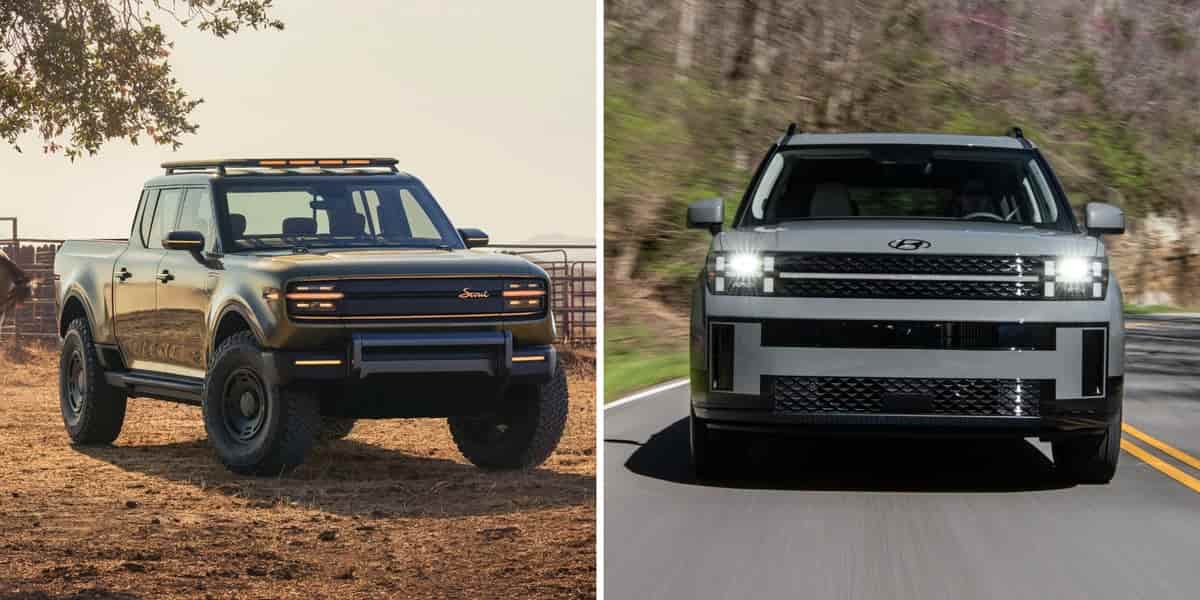
- Brands like Ram, Jeep, Hyundai, Genesis, Ford, and Scout Motors are developing EREV models, primarily in truck and SUV segments.
- The EREV concept is seen as a potential successor to plug-in hybrids (PHEVs), which have seen low adoption rates.
Automakers are increasingly placing their bets on a new type of electrified vehicle: the Extended-Range Electric Vehicle (EREV). Several major brands, including Hyundai, Genesis, Ram, Jeep, Ford, and Volkswagen-backed Scout Motors, have announced plans to introduce EREVs by the end of 2028. This strategy comes as automakers grapple with slower-than-anticipated electric vehicle (EV) adoption and persistently elevated gasoline prices, leading them to believe consumers desire the electric driving experience without the range anxiety associated with fully electric cars.
An EREV is characterized by having both a substantial battery pack and a gasoline engine. Its wheels are exclusively powered by electric motors. The gasoline engine's role is to burn fuel and generate electricity, which is then used to power the motors or recharge the battery once its level falls. This setup aims to combine the benefits of EVs and traditional gasoline vehicles. Owners can typically handle most daily driving using electricity, with the gasoline engine available for longer trips or demanding tasks like towing, where the range of an all-electric vehicle can be significantly reduced.
EREVs are expected to offer approximately 120 to 150 miles of electric-only driving, followed by several hundred additional miles of range when using gasoline. This format is particularly suited for larger vehicles like trucks and SUVs, segments popular among American consumers. These larger vehicles also provide ample space for the necessary battery, engine, and fuel tank components.
Automakers are using various names for this technology. Ram's upcoming pickup is called the Ram 1500 REV, expected in the first half of 2027 with 145 miles of electric range and a total range of up to 690 miles. Jeep's related SUV will be named the REEV. Hyundai plans to launch a three-row Santa Fe EREV in early 2027 with over 600 miles of range, and its luxury brand Genesis will also introduce an EREV SUV. Ford intends to equip its next-generation F-150 Lightning with a gas generator, following disappointing sales of the all-electric version. Scout Motors will offer gas-generator options for its Traveler SUV and Terra pickup. Nissan's upcoming Rogue e-POWER hybrid, while not officially an EREV, operates on a similar principle where the gas engine generates electricity for electric motors driving the wheels.
The EREV concept is being positioned as a potential successor to plug-in hybrids (PHEVs), which have struggled to achieve widespread adoption. The Energy Information Administration reported that PHEVs accounted for only 1.4% of US vehicle sales in the second quarter of 2026. Stellantis has announced a significant write-down and is discontinuing its PHEV lineup. While some PHEVs like Toyota's Prius and RAV4 and Mitsubishi's Outlander Plug-In Hybrid have found niche audiences, the overall PHEV model has faced challenges due to higher costs compared to gasoline cars and traditional hybrids, and the dependency on owners regularly plugging them in, which many reportedly do not do. Experts suggest EREVs might be more successful due to mechanical simplicity and a more consistent performance regardless of power source. However, EREVs could also face similar pricing and consumer education hurdles as PHEVs, with models like the Ram 1500 REV potentially priced between $60,000 and $100,000.