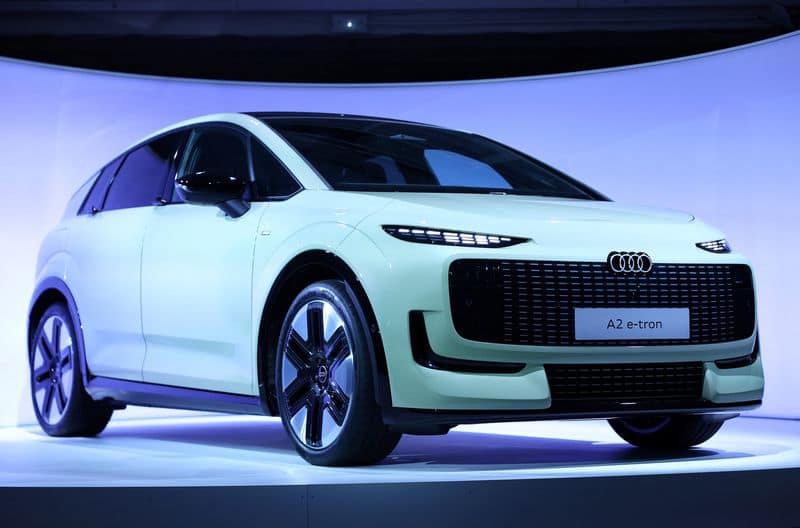
Audi introduced a new compact electric vehicle, the A2 e-tron, aimed at increasing its presence in the European market and reviving global sales. The model boasts low power consumption and a range of 646 km, with deliveries starting in December.

The introduction of the A2 e-tron signifies Audi's strategic response to increased competition in the European EV market, particularly from more affordable Chinese models, and its efforts to reverse declining sales. The company's focus on efficiency and potential restructuring of its German plants highlight the significant pressures facing established automakers in the global transition to electri
Audi has introduced a new compact electric vehicle, the A2 e-tron, in an effort to bolster its presence in the European market and revive its global sales. The German automaker, a unit of Volkswagen, has experienced declining sales for two consecutive years, with a 7% drop in the first half of 2026, attributed to intense competition in China and U.S. tariffs.
Audi CEO Gernot Doellner stated that "premium cannot just mean more — more power, more resources — it has to mean using resources more intelligently," highlighting the strategic importance of compact and efficient vehicles for the future in Europe. The new A2 e-tron, a revival of an earlier model, features modern efficiencies such as low power consumption of 12.8 kilowatt hours per 100 km and a maximum range of 646 km (401 miles), making it Audi's most efficient model to date.
Production of the A2 e-tron will occur at Audi's plant in Ingolstadt, Germany, with deliveries expected to begin in December. Doellner expressed confidence in Audi's position regarding electromobility, despite the competitive landscape presented by Chinese EV manufacturers. This move follows Volkswagen's recent approval of significant job cuts aimed at addressing market challenges, including tariffs, overcapacity, and competition from Chinese rivals. Concerns have also been raised about the future of Audi's Neckarsulm plant, which may face closure after 2030 due to a lack of allocated new models, prompting discussions with union representatives to optimize its operations.