Key facts
- Acting Army Secretary Adam Telle said the Army is proceeding with the controlled removal in full coordination with all state, local and federal authorities.
- Telle called moving forward a consensus decision and said every expert agency agrees.
- The Army planned to detonate 68 barrels of degraded lead azide, a stockpile of 9,700 pounds (4.4 tons), at the Iowa Army Ammunition Plant.
- Environmental challengers represented by Earthjustice said a toxic plume could reach up to 100 miles, according to the report.
- Trump said in a Truth Social post that he backed the detonation but would not move it forward without permission from Sand and the courts.
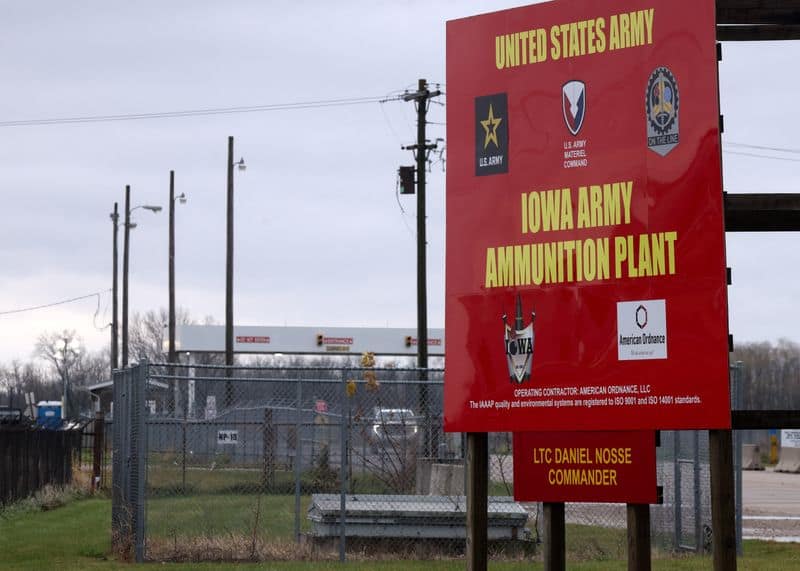
A three-judge panel of the 8th U.S. Circuit Court of Appeals declined on Monday, November 23, 2026, to halt the Army's planned detonation of lead azide at the Iowa Army Ammunition Plant in Middletown, Iowa. The decision left the matter with the incoming Iowa governor and the administration.
Acting Army Secretary Adam Telle said in a post on X that the Army was proceeding with the controlled removal in full coordination with all state, local and federal authorities, adding that the safety of Iowa's citizens came first. Telle called moving forward a consensus decision and said every expert agency agrees, and that both Iowa's current and incoming governors say the call belongs to the experts.
President Trump said in a Truth Social post that he backed the detonation but would not move it forward without permission from both Governor-elect Rob Sand and the courts. He said they would be responsible for any adverse impacts of not proceeding. Sand said in a statement that the administration should make the decision.
The Army announced last week that it planned to detonate degraded lead azide at the plant in a matter of days, resulting in a plume with lead-containing particles in the air. The announcement created an uproar, causing fears that people would be exposed to toxic lead both immediately and in the aftermath. The federal government has argued that a controlled detonation would be more favorable than risking an accidental explosion.
The detonation had been slated for Monday, but on Sunday the Army said it would be postponed until Wednesday to allow for more optimal weather conditions. The Army issued a public advisory on November 15 that it planned to detonate degraded lead azide within five days.
Environmental challengers represented by Earthjustice said a toxic plume could reach up to 100 miles, according to the report. In children, exposure to lead can cause brain damage, nervous system damage, learning problems, behavioral issues and a lower IQ, and in rare cases seizures, coma and death, according to the Environmental Protection Agency. In adults, lead exposure can cause decreased kidney function, heart-related issues and fertility issues.