Key facts
- The Army plans to detonate 68 drums of crystallized lead azide at the Iowa Army Ammunition Plant on November 25, 2026.
- The material totals more than 9,700 pounds net explosive weight, the Army said.
- The Army said the blast could throw concrete chunks up to 3,000 feet and leave a crater 38 feet wide and about 5 feet deep.
- Acting Army Secretary Adam Telle said the Army could not find a viable alternative to an in-place detonation.
- The Army forecast a plume of lead dust drifting southwest across Iowa into Missouri and advised nearby residents to evacuate.
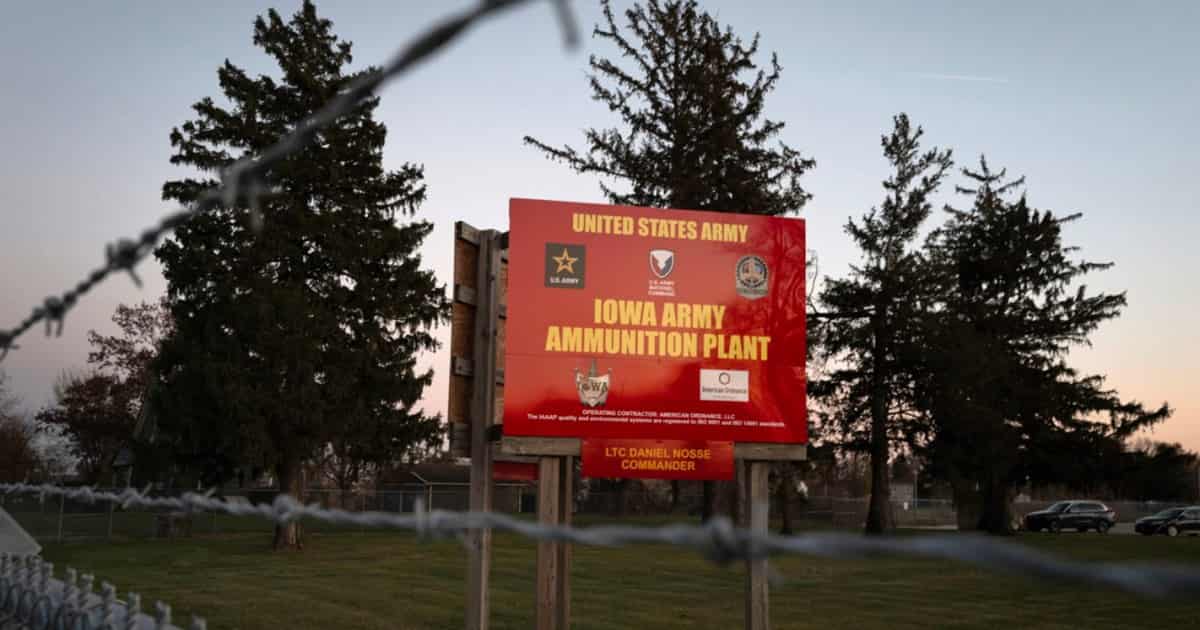
The US Army will detonate 68 drums of degraded lead azide at the Iowa Army Ammunition Plant in Middletown, Iowa, on November 25, 2026, at about 9:00 a.m. CST, it said in a statement and at a news conference on November 24. The Army said the material, more than 9,700 pounds net explosive weight, has crystallized and become highly sensitive to heat, shock and friction.
Officials from the Army, the Environmental Protection Agency, the Bureau of Alcohol, Tobacco, Firearms and Explosives and other agencies said extensive precautions are in place. The Army has built a two-story barrier of sand-filled HESCO units around the site and plans to saturate the sand and apply a mist during the blast, according to NBC News. Acting Army Secretary Adam Telle said the Army would also use a water wall, foam barriers and gel blocks.
The Army's forecast map shows a plume of lead dust drifting southwest across Iowa into Missouri, and officials recommended that anyone in the immediate vicinity evacuate. Lead is a neurotoxin with no safe level of exposure, NBC News reported. Emergency permitting documents submitted to the EPA say concrete chunks could land up to 3,000 feet away and the blast could leave a crater 38 feet wide and about 5 feet deep.
A federal appeals court on November 23 cleared the Army to proceed over a lawsuit challenging the plan. Army officials said they found the problem during an inspection in March. Telle said the Army explored other options but found none safe. MuniRem Environmental CEO Valentine Nzengung told NBC News the Army had awarded and then canceled a contract to neutralize the chemical with a sprayable product.