
Key facts
- The Army moved the detonation of 68 lead azide barrels at the Iowa Army Ammunition Plant to November 23, 2026.
- Acting Secretary of the Army Adam Telle said the Army could not delay beyond November 23 because of the compound's deterioration.
- The Army's modeling projected airborne lead at 0.18 micrograms per cubic meter nearly 100 miles north, above the EPA's 0.15 standard.
- The Army said moving the barrels risked an accidental, uncontrolled detonation and ruled out chemical neutralization.
- Environmental groups filed a lawsuit on November 19, 2026 seeking a court-ordered pause of the detonation.
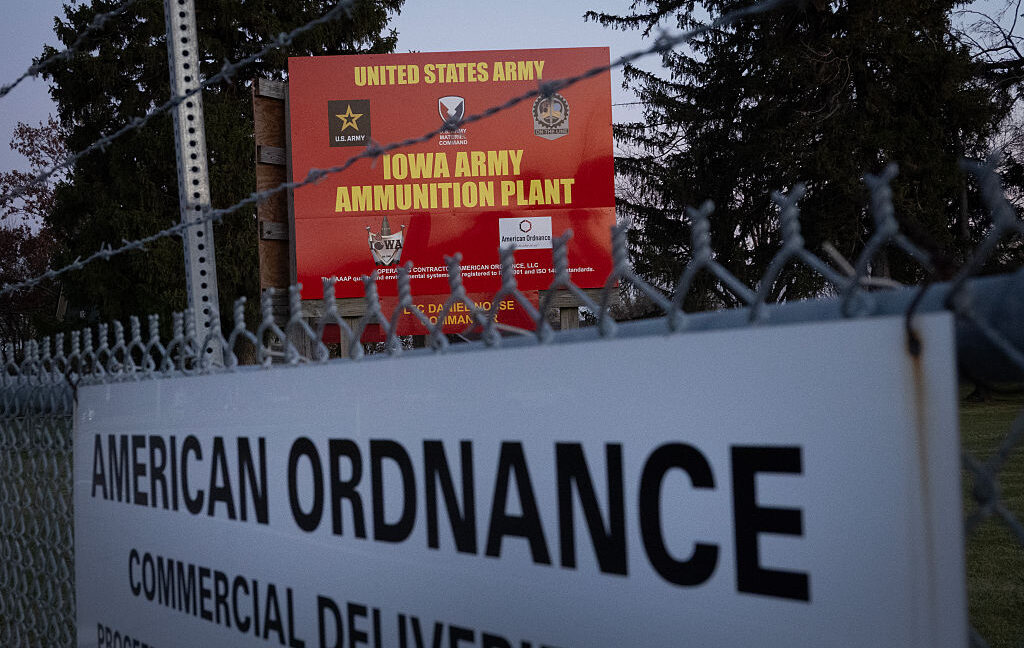
The US Army said late on November 19, 2026 that it would delay a plan to blow up 68 deteriorating barrels of lead azide at the Iowa Army Ammunition Plant in Middletown, Iowa, moving the controlled detonation to November 23, 2026. The Army had planned two simultaneous detonations around noon on November 20 to destroy the barrels where they lie, inside earth-covered concrete containment structures.
Acting Secretary of the Army Adam Telle said in a social media post at 7:31 pm ET on November 19 that public communication is essential to public trust and that the Army would keep engaging state and local officials to distribute accurate information. Telle said the Army could not delay beyond November 23 because of the state of deterioration of the compound, which he described as extremely explosive and sensitive, and because a forecast temperature drop would risk further destabilization.
Modeling the Army released on November 18 projected that a plume containing neurotoxic lead could drift up to 100 miles north of the installation. Lead dust deposition of between 5 and 100 micrograms per square foot could reach up to 25 miles north, nearly to Wapello, Iowa, while airborne lead at 0.18 micrograms per cubic meter would reach nearly 100 miles north toward Cedar Rapids, Iowa. The EPA standard for lead in air is 0.15 micrograms per cubic meter.
The Army said in an environmental assessment released on November 18 that moving the barrels was ruled out because sloshing or physical shock could cause an accidental, uncontrolled detonation. It also ruled out chemical neutralization, which it said would require handling the material over 7 to 22 days at a rate of 3 to 10 barrels per day. The Army said the lead azide in the 68 barrels, reported to total around 9,700 pounds (4.4 tons), is suspended in a mixture of water and ethanol and has degraded and crystallized over time.
Iowa governor-elect Rob Sand wrote on social media that an unacceptable lack of communication and clarity had made Iowans concerned and angry. Illinois Governor JB Pritzker wrote that the state's leaders were demanding answers about how the plan could affect people's health and safety. Environmental groups filed a lawsuit on November 19 seeking a court-ordered pause, alleging the EPA approved the plan without full consideration of less dangerous alternatives and with inadequate public notice. The Army, Department of Health and Human Services and EPA said in a joint statement on November 20 that the interagency was working to ensure the detonation is conducted in the safest fashion possible.