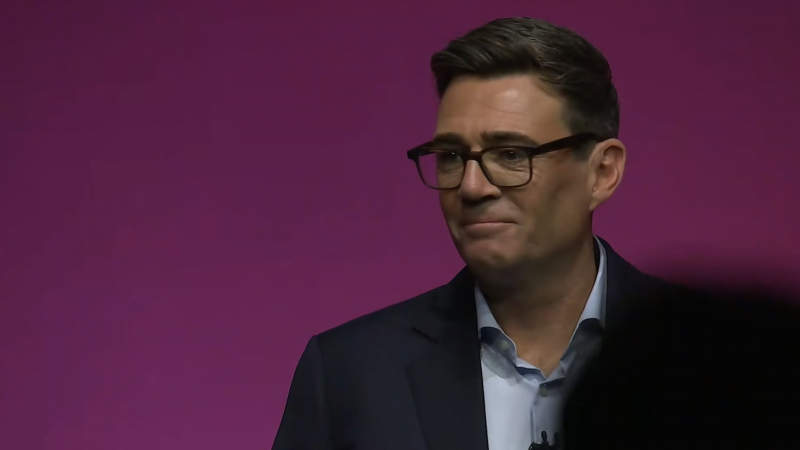
Prime Minister Andy Burnham outlined a vision for Britain focused on public ownership and a National Care Service, in his first speech to the Labour conference as leader. He vowed to repeal a ban on public ownership of water companies and adjust the state pension triple lock to fund care reform.

Burnham's policy announcements signal a significant shift in the UK's economic direction, with a focus on reversing privatization and expanding public services. The proposed changes to the state pension and the creation of a National Care Service could have long-term implications for public finances and social welfare.
Prime Minister Andy Burnham delivered his first speech to the Labour conference as party leader, outlining a vision for Britain that includes greater public ownership and a new National Care Service. Burnham, who became Prime Minister in July, vowed to "break with the direction of the past 40 years" and put Britain on a new path.
Central to his address was a pledge to repeal Margaret Thatcher's 1980s reforms that banned the public ownership of water companies. Burnham called water a "symbol of what has gone wrong with Britain" and stated that repealing the ban would be the "centrepiece" of a strengthened Water Bill. He also announced GB Grid, a publicly owned company intended to challenge private sector energy operators, with the aim of aligning UK energy costs with those of neighboring countries within a decade.
Burnham also addressed the future of the state pension triple lock, stating that Labour's manifesto commitment to retain it until the end of the current Parliament would be honored. However, from April 2030, he plans to adjust the system so that pensions rise annually by the higher of inflation or 2.5%, with potential increases to match average worker earnings in some years. Burnham stated these changes would "generate significant savings" to fund his long-held ambition of creating a National Care Service in England, which he described as being free at the point of use, with "everyone contributes and everyone is covered."
The speech also touched on electoral reform, with Burnham announcing a new National Commission on Electoral Reform. He spoke with visible emotion about his late father, Roy, who died two weeks prior to the speech, and his determination to prove wrong Scottish First Minister John Swinney, who had suggested Burnham might be the last Prime Minister of the UK.
Pick the topics you care about. Get only what matters, on your cadence.