
Key facts
- Tavus claims 48% of participants believed Griffin-Lite was human after a one-minute video call.
- Griffin-Lite scored 3.83 out of 5 on Nvidia's VideoFDB benchmark for generation.
- The model's previous system convinced only 1 of 41 participants (2.4%) it was human.
- Participants were told they would meet another person, not that a bot might be involved.
- The results are from Tavus' own research and have been flagged as not independently verified.
- Griffin-Lite is currently limited to select trusted testers.
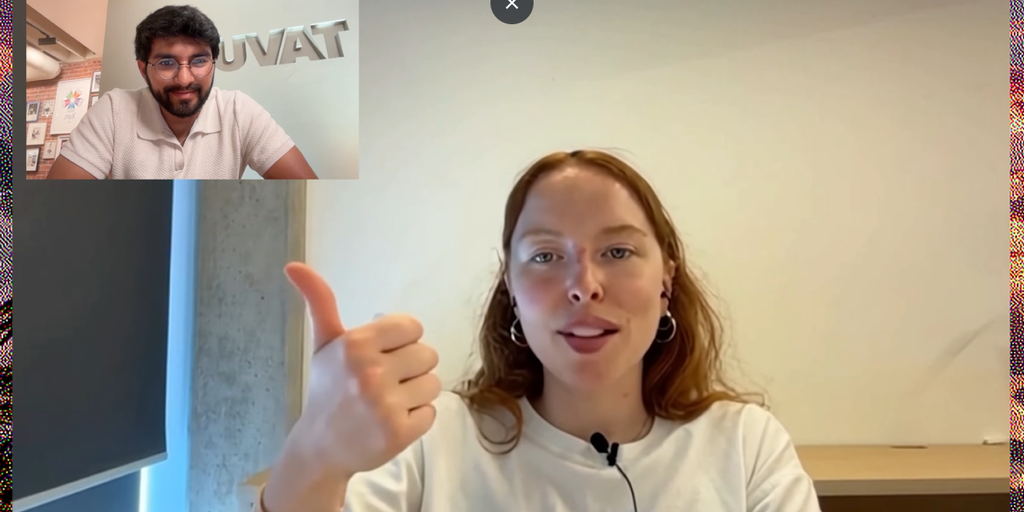
AI startup Tavus claims its new model, Griffin, can convincingly mimic human interaction on live video calls. The company stated that 48% of participants in its internal research believed they were speaking with a real person after a one-minute conversation with Griffin-Lite, a version of the model. This marks a significant improvement over its previous system, which convinced only 2.4% of participants.
Tavus' Griffin-Lite achieved a generation score of 3.83 out of 5 on Nvidia's VideoFDB benchmark, surpassing other systems and nearing the human reference score of 3.92. However, on the perception track, which measures understanding of visual and auditory cues, Griffin-Lite scored 3.73, trailing the human reference score of 4.20.
The research was conducted by Tavus, with participants recruited through an independent platform and informed they would be speaking with another person. A community note on X has highlighted that these results are not independently verified and do not adhere to standard protocols. Tavus notes that people who became suspicious typically did so within 20 seconds.
Concerns about AI's ability to deceive on video calls are growing, particularly in light of past incidents where North Korea-linked hackers used deepfakes to impersonate trusted contacts on platforms like Zoom and Teams to install malware. Companies are developing defenses, such as spontaneous questioning during job interviews, to identify potential AI imposters.
Griffin-Lite is not currently available to the public and is limited to select trusted testers as Tavus works on implementing safety measures and disclosure features before a wider release. The company previously raised $40 million in a Series B funding round led by CRV in November 2025.