Key facts
- Fariba Hashimi finished seventh in the women's individual time trial at the Asian Games.
- Hashimi disguised herself as a man and faced aggression, including stones and bottles being thrown, to train in Afghanistan.
- She fled Afghanistan after the Taliban returned to power in 2021.
- Hashimi now lives in Italy and hopes her participation inspires women in her home country.
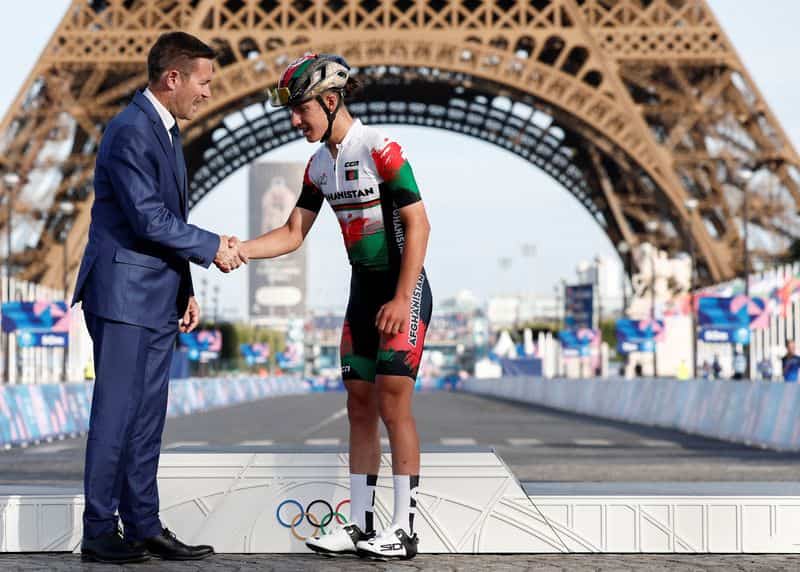
- She competed at the Paris Olympics with her sister Yulduz.
- Hashimi has not seen her family for a long time.
Fariba Hashimi, a 23-year-old Afghan cyclist, achieved a seventh-place finish in the women's individual time trial at the Asian Games in Nagoya, Japan. Her journey to this point has been fraught with significant challenges, including disguising herself as a man to train and fleeing her homeland after the Taliban's return to power in 2021. Hashimi, now settled in Italy, spoke about the profound personal meaning of her participation, hoping it serves as an inspiration to women in Afghanistan, where UNESCO estimates 2.4 million girls have been excluded from secondary education.
Hashimi recounted the dangers she faced in her home province of Faryab, where she wore masks and multiple disguises to conceal her identity during training sessions, fearing recognition and attack. She described incidents of stones and bottles being thrown at her, part of aggressive attempts to deter her from cycling. Despite these hardships, she emphasized that she does not view her people as bad, but rather that the "mentality is different." She followed her sister, Yulduz, also an international cyclist, into the sport at age 15.
With assistance from 1997 road cycling world champion Alessandra Cappellotto, Hashimi relocated to Italy, where both sisters competed in the Paris Olympics two years ago. Hashimi expressed sadness at not being able to live in her country and not seeing her family for an extended period, stating she escaped to follow her dream. Her ultimate aspiration is to return to Afghanistan and inspire her people, hoping for a future where women from within the country can compete internationally.