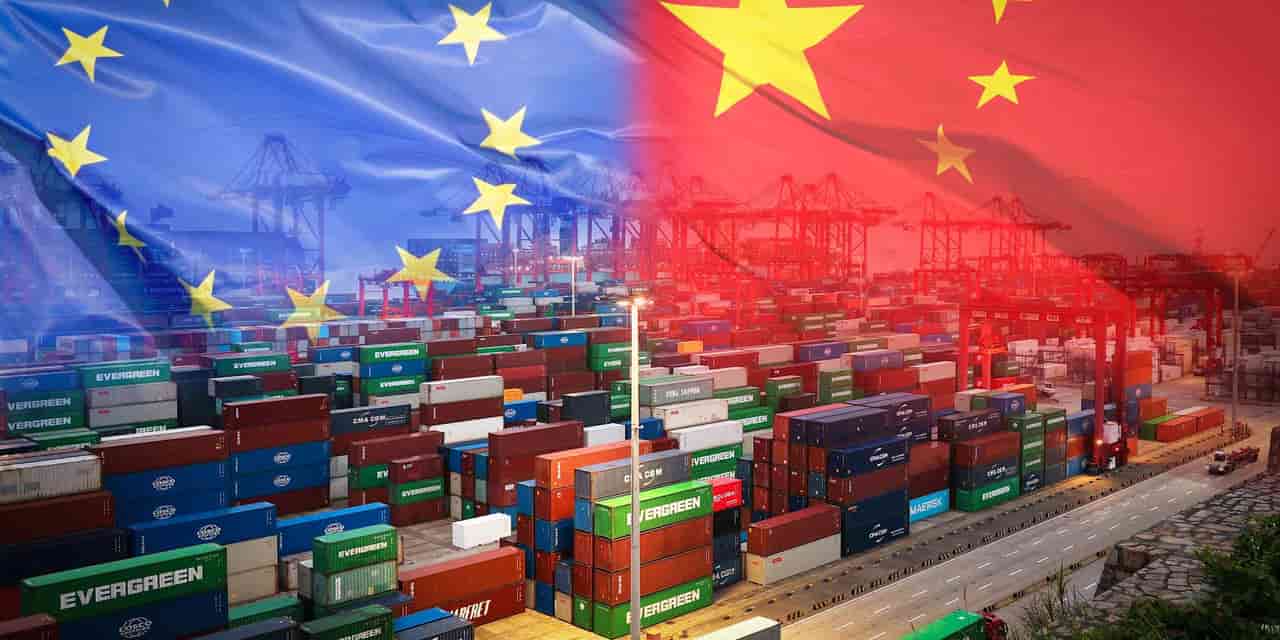
EU Imposes Tariffs on Chinese Steel and E-commerce Imports
window 24h
IN SHORT
The European Union is implementing new measures to address trade imbalances and security concerns related to China. New regulations include a 3 euro customs duty on parcels under 150 euros and annual steel import quotas with a 50% out-of-quota duty. Concurrently, a report highlights a "bleak future" for the EU's chip sector, citing Chinese export controls on critical minerals, U.S. technology dependence, and high energy costs. The EU is also moving towards stricter controls on Chinese investment, prioritizing security and localization in key sectors.
✉Newsletter
PiQ Daily
Pick your topics. Get only what matters, on your cadence.
Key Numbers
3 eurocustoms duty on parcels under 150 euros
150 eurosparcel value threshold for customs duty
50%out-of-quota duty on steel imports
Who's Involved
European Union
bloc implementing new trade and investment regulations targeting China
China
country facing new EU tariffs and investment controls
EU's Institute for Security Studies
organization co-authoring report on EU chip sector risks
Institut Montaigne
organization co-authoring report on EU chip sector risks
China Chamber of Commerce to the EU
organization commenting on EU's shift in Chinese investment policy
1 / 3
Key facts
The EU has introduced a 3 euro customs duty on parcels under 150 euros.
Annual steel import quotas are now in place for Chinese steel.
A 50% duty will be applied to Chinese steel imports exceeding annual quotas.
A report warns of a "bleak future" for the EU chip sector.
Chinese export controls on critical minerals are a risk to the EU chip sector.
Dependence on U.S. technology is a risk to the EU chip sector.
High energy prices are a risk to the EU chip sector.
The EU is moving towards stricter controls on Chinese investment.
European authorities are prioritizing compliance in key sectors.
The EU is encouraging localization over exports for Chinese investment.
The European Union is enacting a series of new regulations and policy shifts aimed at China, focusing on trade, critical industries, and investment. New customs duties have been introduced, including a 3 euro charge on parcels valued under 150 euros. Additionally, annual steel import quotas are now in place, with a 50% duty applied to any imports exceeding these quotas. These measures are intended to combat the EU's growing trade deficit with China and address alleged unfair trade practices.
Beyond trade tariffs, the EU's critical chip sector is facing significant challenges, according to a report from the EU's Institute for Security Studies and Institut Montaigne. The report warns of a "bleak future" for the sector, attributing these risks to China's export controls on essential minerals, the EU's reliance on U.S. technology, and elevated energy prices within the bloc. This situation underscores a broader strategic concern about the EU's technological sovereignty.
In parallel, the EU is transitioning its approach to Chinese investment. The policy is moving away from a free-market stance towards a model of conditional openness, characterized by enhanced security controls. The China Chamber of Commerce to the EU notes this shift, emphasizing that European authorities are increasingly prioritizing compliance and security within key strategic sectors. The focus is also shifting towards encouraging localization of production and operations within the EU rather than solely relying on exports from China.
↳ Why This Matters
The European Union is enacting a series of new regulations and policy shifts aimed at China, focusing on trade, critical industries, and investment. New customs duties have been introduced, including a 3 euro charge on parcels valued under 150 euros. Additionally, annual steel import quotas are now in place, with a 50% duty applied to any imports exceeding these quotas. These measures are intended to combat the EU's growing trade deficit with China and address alleged unfair trade practices.
Frequently asked questions
The EU has introduced a 3 euro customs duty on parcels valued under 150 euros.
The EU has set tariff-free quotas at 18.3 million metric tons annually, with a 50% duty on volumes exceeding this for 26 types of steel.
The EU aims to address its large trade imbalance with China, protect its steel industry from overcapacity and subsidies, and ensure consumer safety for imported goods.
The trade deficit has been widening, reaching approximately 360 billion euros in 2025, or about 1 billion euros per day.
What Happens Next
01China is expected to respond to the new EU regulations.
02Further tariffs or protectionist measures from other nations may follow.
Get the newsletter.
Pick the topics you actually care about. We'll email when there's news worth your time, on the cadence you choose. Cancel any time from your account.