Oil Prices Set for Largest Quarterly Drop Since Pandemic as Hormuz Flows Recover
window 24h
IN SHORT
Oil prices are experiencing their largest quarterly drop since the COVID-19 pandemic, influenced by a recovery in tanker traffic through the Strait of Hormuz and easing Middle East tensions. Despite this, Asian crude oil imports in June are projected to remain below pre-conflict levels due to ongoing uncertainties and high freight costs. Clean tanker owners are showing increased willingness to transit the Strait of Hormuz, reducing reliance on expensive ship-to-ship transfers, though overall tanker traffic has not yet returned to pre-conflict volumes. In a separate development, QatarEnergy has raised its July sulphur price.
✉Newsletter
PiQ Daily
Pick your topics. Get only what matters, on your cadence.
Key Numbers
20.71 million bpdAsia's crude oil imports in June
$85/tQatarEnergy July sulphur price increase
$890/tQatarEnergy July sulphur price fob
$1,015-1,030/tcfrImplied delivered cost of Qatar sulphur to China
Who's Involved
QatarEnergy Marketing
Energy company that raised its July sulphur price
Asian refiners
Buyers of crude oil redirecting Middle East supply
Clean tanker owners
Operators showing willingness to transit Strait of Hormuz
1 / 3
Key facts
Oil prices are set for their largest quarterly drop since the COVID-19 pandemic.
Tanker traffic through the Strait of Hormuz is recovering.
Middle East crude is being redirected to the U.S. by Asian refiners.
Clean tanker owners are increasingly willing to transit the Strait of Hormuz.
Asia's crude oil imports in June are projected at 20.71 million bpd.
Asia's crude oil imports in June are below pre-conflict levels.
Refiners have secured non-Middle Eastern crude for July and August.
QatarEnergy Marketing increased its July Qatar Sulphur Price (QSP) by $85/t.
The July QSP is $890/t fob Ras Laffan/Mesaieed.
Delivered cost of Qatar sulphur to Chinese ports is implied at $1,015-1,030/tcfr.
Oil prices are on track for their largest quarterly decline since the onset of the COVID-19 pandemic. This significant drop is attributed to a combination of factors, including a recovery in tanker traffic through the critical Strait of Hormuz and a general easing of geopolitical tensions in the Middle East. The improved flow of oil has led Asian refiners to redirect Middle East crude to the U.S. as supply conditions become more favorable.
Despite the positive signs of recovery in tanker movements, uncertainties persist. Asia's crude oil imports for June are forecast to be 20.71 million barrels per day, a figure that remains below pre-conflict levels. This cautious approach by Asian refiners is influenced by lingering concerns over the Strait of Hormuz and elevated freight costs. However, refiners have secured sufficient non-Middle Eastern crude supplies for July and August, mitigating immediate import needs.
Clean tanker owners are demonstrating a growing readiness to resume transits through the Strait of Hormuz. This willingness suggests a reduced dependence on costly ship-to-ship transfers, which have been employed to circumvent potential risks. Nevertheless, the broader market sentiment indicates that geopolitical risks have not entirely dissipated, as overall tanker traffic has not yet reached its pre-conflict levels.
In a related market development, QatarEnergy Marketing has announced an increase in its July Qatar Sulphur Price (QSP). The price has been raised by $85 per tonne to $890 per tonne, free on board (fob) from Ras Laffan and Mesaieed. Current freight rates to Chinese ports suggest a delivered cost for this sulphur product ranging between $1,015 and $1,030 per tonne.
↳ Why This Matters
Oil prices are on track for their largest quarterly decline since the onset of the COVID-19 pandemic. This significant drop is attributed to a combination of factors, including a recovery in tanker traffic through the critical Strait of Hormuz and a general easing of geopolitical tensions in the Middle East. The improved flow of oil has led Asian refiners to redirect Middle East crude to the U.S. as supply conditions become more favorable.
Frequently asked questions
The Strait of Hormuz is a vital chokepoint for global energy supplies, connecting the Persian Gulf to the open ocean. Approximately 14 million barrels of oil are transported through it.
Asian refiners have secured sufficient crude for the next two months from non-Middle Eastern sources and are seeing increased supply from the Middle East as the Strait of Hormuz reopens, making Middle Eastern grades more competitive.
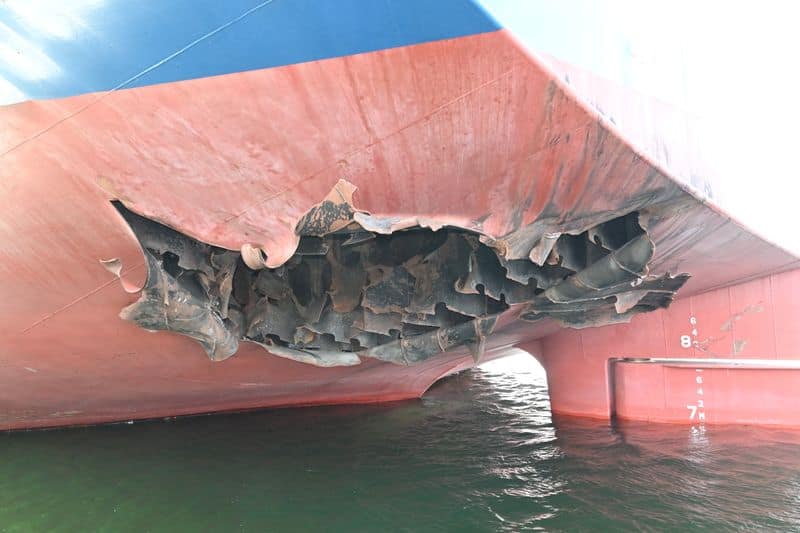
The Namu was hit near the stern in an attack in May, likely involving an Iranian anti-ship missile according to South Korea, though Iran denied involvement. It is undergoing repairs and expected to exit the Strait of Hormuz in mid-July.
What Happens Next
01Monitor developments regarding the Strait of Hormuz's openness.
02Observe U.S. inventory levels at Cushing and the SPR.
03Track future crude oil purchase decisions by Asian refiners.
04Track repairs and exit of the vessel Namu from the Strait of Hormuz.
Get the newsletter.
Pick the topics you actually care about. We'll email when there's news worth your time, on the cadence you choose. Cancel any time from your account.