Key facts
- Oil prices fell more than 1% on Wednesday.
Oil prices are declining, nearing four-month lows, as tanker traffic through the Strait of Hormuz is expected to increase. This follows claims by President Donald Trump of a "secret mission" to escort tankers and a US-Iran sanctions waiver. Tanker rates have nearly doubled in a week, with some VLCCs earning up to $470,000 daily. Meanwhile, Middle East EDC output remains low due to vessel congestion and weak prices, though Saudi Arabian phosphate cargoes have begun transiting Hormuz again after a de-escalation of tensions.
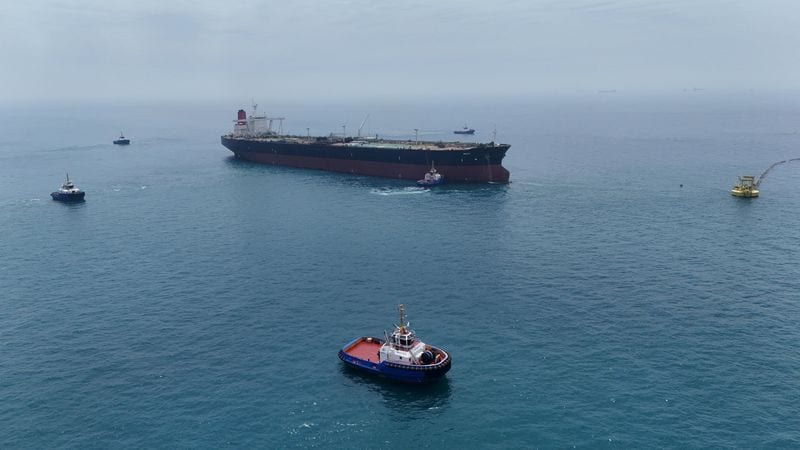
Oil prices have fallen over 1% on Wednesday, approaching four-month lows, driven by expectations of smoother crude flows through the Strait of Hormuz. This anticipated increase in tanker traffic is attributed to a US-Iran sanctions waiver and eased hostilities in Lebanon. Concurrently, tanker rates have surged, nearly doubling in the past week, with some Very Large Crude Carriers (VLCCs) commanding daily rates as high as $470,000. This surge follows President Donald Trump's announcement of a "secret mission" aimed at escorting tankers at night with their transmitters turned off.
Despite the de-escalation of tensions and the resumption of shipments through the Strait of Hormuz, Middle East EDC (Ethylene Dichloride) production remains subdued. This is attributed to ongoing vessel congestion, high inventory levels, and weak prices for VCM (Vinyl Chloride Monomer) and PVC (Polyvinyl Chloride). While Fujairah anticipates the return of Iranian HSFO (High Sulphur Fuel Oil), market participants express caution regarding the timeline and the enforcement of any agreements.
In a concrete sign of the easing situation, three Saudi Arabian DAP/MAP (Diammonium Phosphate/Monoammonium Phosphate) cargoes, totaling 154,000 tons, have successfully transited the Strait of Hormuz since the beginning of the week. This marks the first instance of phosphate cargoes crossing the strait since early May, following a period of heightened tensions between the US and Iran. The increased tanker traffic and the resumption of cargo movements through this critical chokepoint are contributing to the downward pressure on oil prices.
Oil prices have fallen over 1% on Wednesday, approaching four-month lows, driven by expectations of smoother crude flows through the Strait of Hormuz. This anticipated increase in tanker traffic is attributed to a US-Iran sanctions waiver and eased hostilities in Lebanon. Concurrently, tanker rates have surged, nearly doubling in the past week, with some Very Large Crude Carriers (VLCCs) commanding daily rates as high as $470,000. This surge follows President Donald Trump's announcement of a "secret mission" aimed at escorting tankers at night with their transmitters turned off.