Key facts
- China's industry ministry has introduced new rules for replacing steel production capacity.
- The rules end a nearly two-year suspension of approvals for steel capacity replacement.
- The revised measures aim to accelerate the steel sector's low-carbon transition.
- New rules require more capacity retirement before new facilities can be built.
- The policy favors greener steelmaking routes.
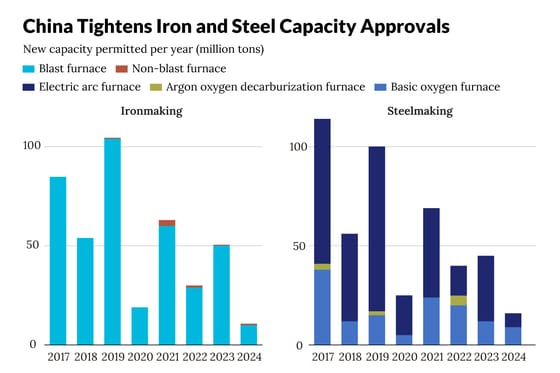
China's Ministry of Industry and Information Technology has reintroduced rules governing the replacement of steel production capacity, marking the end of an approximately two-year suspension on such approvals. The revised measures are designed to expedite the decarbonization efforts within the nation's substantial steel sector. A key component of the new policy is the requirement for a greater amount of existing steelmaking capacity to be retired before new facilities can receive approval. This approach aims to ensure that any new capacity introduced is more efficient and environmentally sound, thereby promoting greener steelmaking routes. The ministry's move signals a renewed focus on balancing industrial growth with environmental objectives, particularly in a sector that is a significant contributor to carbon emissions. By linking new capacity to the retirement of older plants, China seeks to upgrade its industrial infrastructure while simultaneously reducing its carbon footprint. The policy is expected to influence investment decisions and technological adoption within the steel industry, pushing it towards more sustainable practices.