HomeEverything
Equities & FundsCrypto & Digital AssetsAI & TechnologyBusiness & CorporateUS Politics & PolicyGeopolitics & Global RiskMacro, Rates & FXCommodities & EnergyEuropean Politics & MarketsAsia-PacificReal Estate & Property
← All Stories

China's New Steel Rules Test Limits of Industrial Decarbonization

Created at 30 Jun · 10:05 AM1 source↑ Market-relevant
IN SHORT

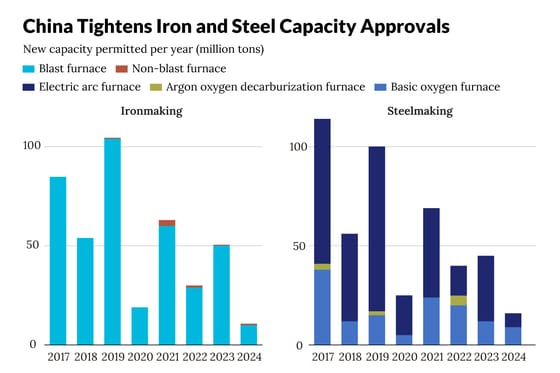
China's industry ministry has introduced new rules for replacing steel production capacity, ending a nearly two-year suspension of approvals. The revised measures aim to accelerate the steel sector's low-carbon transition by requiring more capacity retirement before new facilities can be built and favoring greener steelmaking routes.

✉Newsletter

PiQ Daily

Pick your topics. Get only what matters, on your cadence.

Key Numbers

1.5:1new retirement ratio for steel capacity
2 yearssuspension of new steel capacity approvals
2014year first steel capacity replacement rules introduced
2021year of previous significant policy overhaul
16%steelmaking's share of national carbon emissions

Who's Involved

China's industry ministry
announced new rules for steel production capacity replacement
China's New Steel Rules Test Limits of Industrial Decarbonization

↳ Why This Matters

These new regulations are critical for China's industrial decarbonization efforts, as the steel sector is a major contributor to national carbon emissions. The policy's effectiveness in promoting greener steelmaking routes will have significant implications for China's climate goals and the global steel market.

Key facts

  • China's industry ministry has announced new rules for replacing steel production capacity.
  • These changes end a nearly two-year suspension of new approvals for steel capacity.
  • The revised measures increase the retirement ratio to 1.5 tonnes of existing capacity for every 1 tonne of new capacity.
  • Dormant capacity is now restricted from being counted as replaceable.
  • The policy aims to support the transition to greener steelmaking routes like electric arc furnaces and hydrogen-based methods.

China's industry ministry has unveiled new regulations for replacing steel production capacity, marking the most substantial policy revision since 2021 and ending a nearly two-year suspension of new approvals. These revised measures, announced on May 18, intensify the requirement for retiring existing capacity before new facilities can be built, tighten eligibility criteria, and introduce new restrictions on the use of dormant capacity.

The steel sector, responsible for approximately 16% of China's national carbon emissions, faces significant pressure to reduce its environmental impact amid slower demand growth and weak profitability. The updated policy aims to address these challenges by potentially accelerating the industry's low-carbon transition.

Since 2014, national steel policy has focused on controlling overall capacity and encouraging upgrades by mandating the retirement of older facilities before new ones can be approved. Initially, the ratio was 1.25 tonnes retired for every 1 tonne added in key regions, and 1:1 elsewhere. This evolved over time, with revisions in 2017 and 2021 incorporating preferential treatment for less polluting methods like electric arc furnaces (EAF) and emerging low-carbon technologies such as hydrogen-based steelmaking, aligning with China's climate pledges.

The latest revision generally requires 1.5 tonnes of existing capacity to be retired for every tonne of new capacity, an increase from the previous 1.25:1 ratio. It also excludes long-idled capacity from being counted as replaceable and restricts the transfer of capacity quotas. These changes reflect a growing concern for the quality of capacity reduction and a drive to create space for lower-carbon steelmaking technologies.

Frequently asked questions

The revised measures generally require 1.5 tonnes of existing capacity to be retired for every 1 tonne of new capacity that proceeds.

The reforms aim to manage industrial overcapacity, improve air quality, and increasingly support the decarbonization of the steel sector, which is a major source of carbon emissions.

The policy provides explicit support for Electric Arc Furnace (EAF) steelmaking and emerging low-carbon technologies, such as hydrogen-based steelmaking.

What Happens Next

01Monitor the impact of new rules on steel capacity approvals and retirements.
02Observe the uptake of EAF and hydrogen-based steelmaking technologies.

Get the newsletter.

Pick the topics you actually care about. We'll email when there's news worth your time, on the cadence you choose. Cancel any time from your account.

Cadence
CME Headlines
  • Amendments to the Daily Settlement Procedure Document for the Aluminum Futures Contract
    20 Jul · 1:54 PM
  • Fresh from the Trading Room: Copper’s Crossroads
    1 Jul · 7:45 AM
  • Fresh from the Trading Room: Copper’s Crossroads
    1 Jul · 7:45 AM

How It Developed

China's industry ministry revealed new rules for replacing steel production capacity.
The changes end a nearly two-year suspension of new approvals for steel capacity.
The revised measures require more existing capacity to be retired before new capacity is added.
New restrictions are placed on the use of dormant capacity.
The policy aims to accelerate the steel sector's low-carbon transition.

Sources

T1
China’s New Steel Rules Test Limits of Industrial DecarbonizationCaixin Global
T2
Can China's new steel capacity rules accelerate its green transition ...eco-business.com
T2
PDF Steel Decarbonization at the Crossroads: Technological Pathways and ...gotrawama.eu
T2
China unveils draft rules to curb new steel capacity, tighten green ...govt.chinadaily.com.cn

Related Stories

China's Coal Habit Outpacing Clean Energy Boom
30 Jun · 12:06 AM
Asian nations boost coal use amid Iran war energy shocks
30 Jun · 7:45 AM
China Seen Lifting Some Fuel Export Curbs on Ample Supplies
30 Jun · 7:36 AM
US CO2 Emissions Rose Most Globally in 2025, Report Finds
29 Jun · 11:25 PM
Yancoal to close Ashton coking coal mine in Australia
30 Jun · 10:15 AM