Key facts
- PureField Ingredients launched a 150,000-tonne per year carbon capture and sequestration (CCS) facility in Russell, Kansas.
- The facility captures CO2 generated during ethanol fermentation and stores it permanently underground.
- The project received a Class VI Underground Injection Control program permit from the U.S. EPA.
- PureField Ingredients announced plans to double its ethanol production and carbon sequestration capacity.
- The facility aims to produce one of the lowest-carbon-intensity fuels commercially available in the U.S.
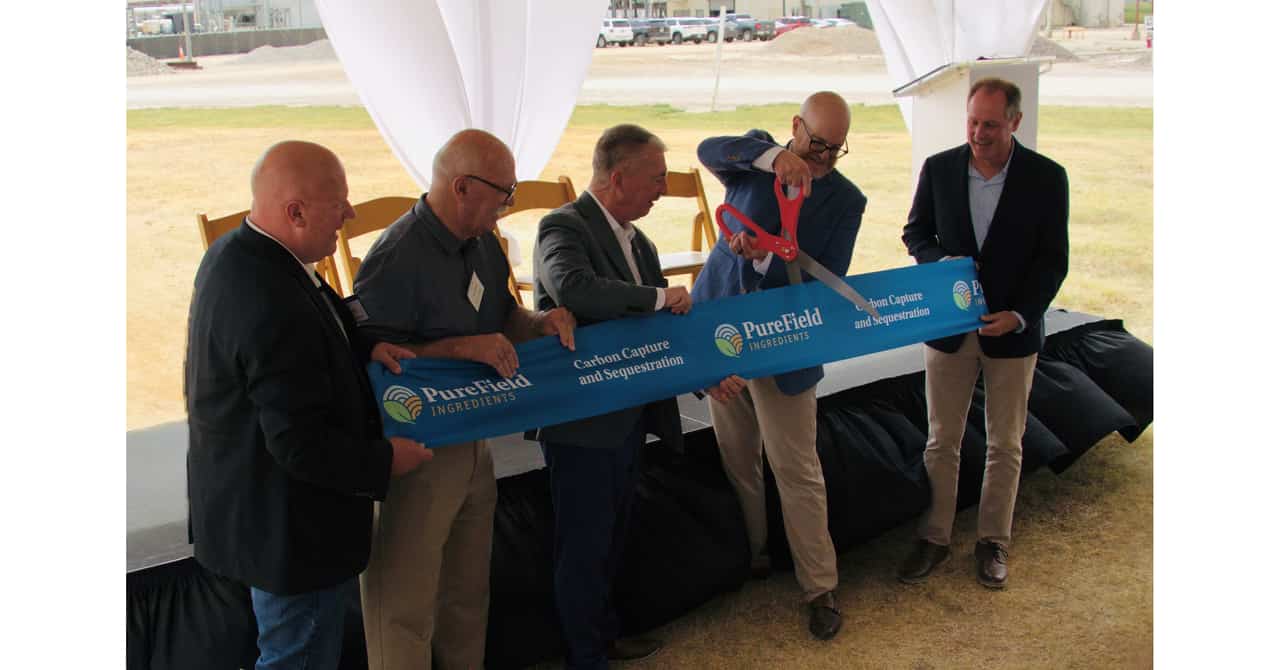
PureField Ingredients has officially launched its carbon capture and sequestration (CCS) facility in Russell, Kansas, with a ribbon-cutting ceremony attended by local, state, and federal officials. The facility is designed to capture 150,000 tonnes of carbon dioxide annually from its ethanol fermentation process and permanently store it underground in a deep geologic formation. This marks a significant step in producing low-carbon-intensity fuels at a commercial scale in the United States, with the aim of achieving near-zero GREET CI scores.
The project, which took four years to develop, received a Class VI Underground Injection Control program permit from the U.S. Environmental Protection Agency after a three-year review. PureField Ingredients CEO Aaron Buettner highlighted the collaborative effort involving private investment, public-sector partnership, and community support. The facility integrates with PureField's operations, transforming locally grown wheat and sorghum into food ingredients, renewable fuel, and animal feed, thereby creating higher-value markets for farmers.
During the ceremony, PureField announced it has initiated planning for an expansion to double its ethanol production and carbon sequestration capacity. This expansion is intended to further strengthen the company's integrated platform, increase demand for Kansas-grown crops, and solidify its leadership in the low-carbon fuels market. The CCS facility will operate under continuing oversight from the EPA and other regulators, with rigorous monitoring requirements in place for the injection period and 50 years afterward.