Key facts
- NASA's Perseverance rover has achieved a record distance driven on Mars.
- Approximately 90 percent of the rover's distance has been driven autonomously.
- The rover's self-driving technology allows it to navigate and compute routes using onboard cameras and algorithms.
- Perseverance's autonomous capabilities have allowed for a broader scientific scope and ahead-of-schedule site discoveries.
- The rover is studying ancient Martian geology to understand past environmental conditions and potential for life.
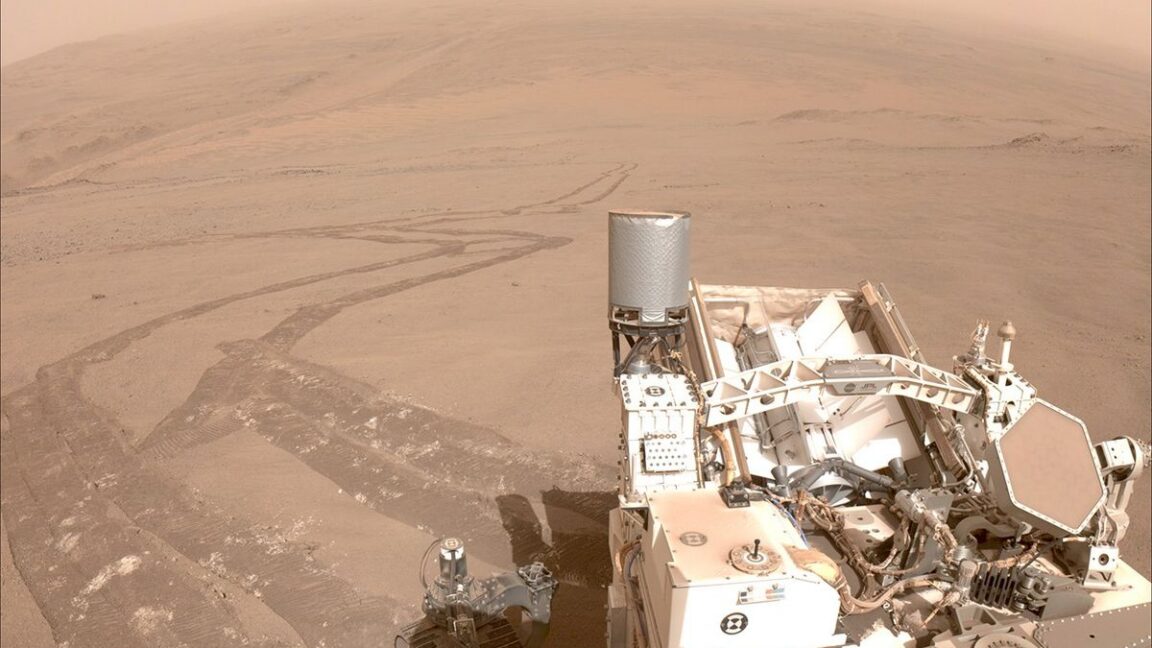
NASA's Perseverance rover is on the verge of setting a new record for the longest distance driven by any vehicle on another planet, having traversed over 45.16 km (28.06 miles) across the Martian surface since its February 2021 landing. This achievement is largely attributed to its sophisticated autonomous navigation system, which accounts for approximately 90 percent of its driving distance.
Unlike its predecessor, the Curiosity rover, which relied more heavily on human commands and had limited autonomous capabilities due to older technology, Perseverance utilizes a more modern Vision Compute Element. This allows the rover to process terrain imagery and calculate safe routes in real-time while its wheels are turning, significantly increasing its operational efficiency. While its maximum speed is about 150 meters per hour, the reduction in time spent waiting for Earth-based commands has maximized scientific data collection.
Steven Lee, project manager for Perseverance, highlighted the auto navigation system as the key enabling technology. Vivian Sun, the mission's deputy project scientist, noted that this driving capability has allowed for a broader scientific scope, enabling the rover to reach new sites ahead of schedule. Perseverance is exploring Jezero Crater, studying ancient rocks dating back up to 4 billion years to understand Mars's past geological and environmental conditions, and its potential habitability.
The rover's wheels have been redesigned for durability and show minimal wear, addressing issues seen with Curiosity's wheels. While the wheel actuators are currently being certified for extended use beyond their initial 20 km life-test, the rover's RTG power source and lack of consumables suggest it could continue driving for many years.