Key facts
- A Concorde 001 prototype aircraft was used to observe the June 30, 1973 total solar eclipse.
- Eight scientists participated in the mission, aiming to extend the observation time beyond ground-based limits.
- The aircraft flew at supersonic speeds, over twice the speed of sound, at an altitude of nearly 17 km.
- Four portholes were installed in the aircraft's ceiling to accommodate scientific instruments.
- The mission set a record for the longest observation of a total solar eclipse, lasting 74 minutes.
- Experiments focused on studying the solar corona, dust in the corona, and oscillating hot gas.
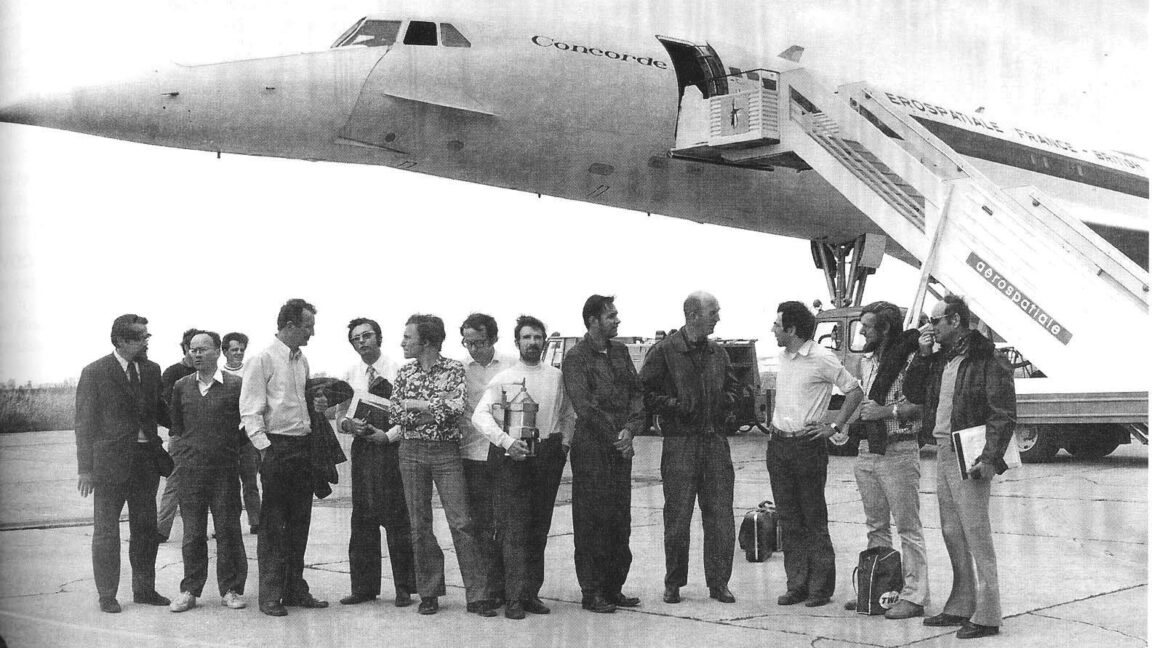
A unique mission in June 1973 saw a Concorde prototype aircraft, designated F-WTSS 001, modified to chase and observe a total solar eclipse. The initiative, spearheaded by scientist Pierre Léna, aimed to extend the duration of totality far beyond what is possible from the ground. By flying at supersonic speeds of over Mach 2.2 at an altitude of nearly 17 kilometers, the scientists aboard the Concorde were able to follow the Moon's shadow for an unprecedented 74 minutes. This record-breaking observation allowed for detailed studies of the Sun's corona and other solar phenomena at various wavelengths. The Concorde 001 prototype, now a museum exhibit at the National Air and Space Museum of France, bears a painted map of Africa tracing the path of this historic eclipse chase. The aircraft was equipped with four portholes in its ceiling, each dedicated to specific scientific experiments conducted by a team of eight scientists from France, the UK, and the United States. The mission required extreme precision for the rendezvous with the eclipse's shadow, which was achieved within one second of the target time using only inertial navigation. Léna described the experience as unique, witnessing the dark circle of the shadow in the Sahara Desert and the visible light outside of it.