Key facts
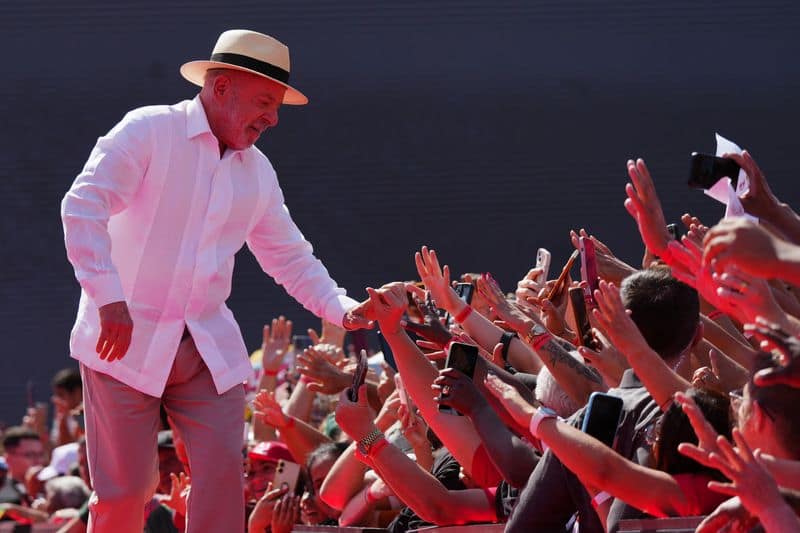
- President Luiz Inacio Lula da Silva holds a narrow lead over Senator Flavio Bolsonaro in Brazilian election polls.
- The margins in Brazilian election polls are within the error margins.
- The U.S. government has discussed new sanctions on Brazilian Supreme Court Justice Alexandre de Moraes.
- The U.S. previously sanctioned and then lifted sanctions on de Moraes.
- President Lee Jae Myung's approval rating has fallen to a new low of 43%.
- President Lee Jae Myung's approval rating has declined for five consecutive weeks.
- Dissatisfaction with real estate tax revisions and housing policy controversies contributed to President Lee's declining approval.
- Prime Minister Benjamin Netanyahu's Likud party is holding primaries to choose candidates.
- A strong showing by hard-right contenders in Likud primaries could affect Netanyahu's re-election.
- Polls suggest some Likud voters desire a more centrist government.
Brazil's upcoming October election shows a tightening presidential race, with President Luiz Inacio Lula da Silva maintaining a slim lead over Senator Flavio Bolsonaro in simulated runoff scenarios. Recent polls indicate that the margins between the two candidates are within the polls' error margins for both first-round and runoff results, suggesting a highly competitive contest.
In parallel developments, the U.S. government has reportedly discussed imposing new sanctions on Brazilian Supreme Court Justice Alexandre de Moraes. The Financial Times, citing sources familiar with the matter, reported these discussions. This potential move follows a previous instance where the U.S. sanctioned de Moraes last year before lifting those sanctions.
Separately, President Lee Jae Myung of South Korea has seen his approval rating drop to a new low of 43 percent. This marks the fifth consecutive week of decline for his approval rating. The poll attributed this decrease in public support to dissatisfaction stemming from recent real estate tax code revisions and ongoing housing policy controversies.
In Israel, the Likud party, led by Prime Minister Benjamin Netanyahu, is preparing for its primaries to select candidates for upcoming elections. Political analysts suggest that a strong performance by hard-right contenders in these primaries could potentially complicate Netanyahu's own re-election hopes. Current polling data indicates a segment of Likud voters desires a more centrist government, a sentiment that could be at odds with a surge in hard-right candidates.