Key facts
- The National Science Foundation (NSF) plans to decommission the Ocean Observatories Initiative (OOI) network.
- The OOI is a $368 million system of scientific instruments monitoring ocean chemistry, temperature, and wave action.
- Alaska's $5.3 billion fishing industry and coastal communities rely on the OOI's real-time data for management and planning.
- The NSF states the decision aligns with a strategy to prioritize evolving scientific priorities and emerging technologies.
- Critics suggest the move aligns with Project 2025's critique of climate research and could create a data void for other nations to fill.
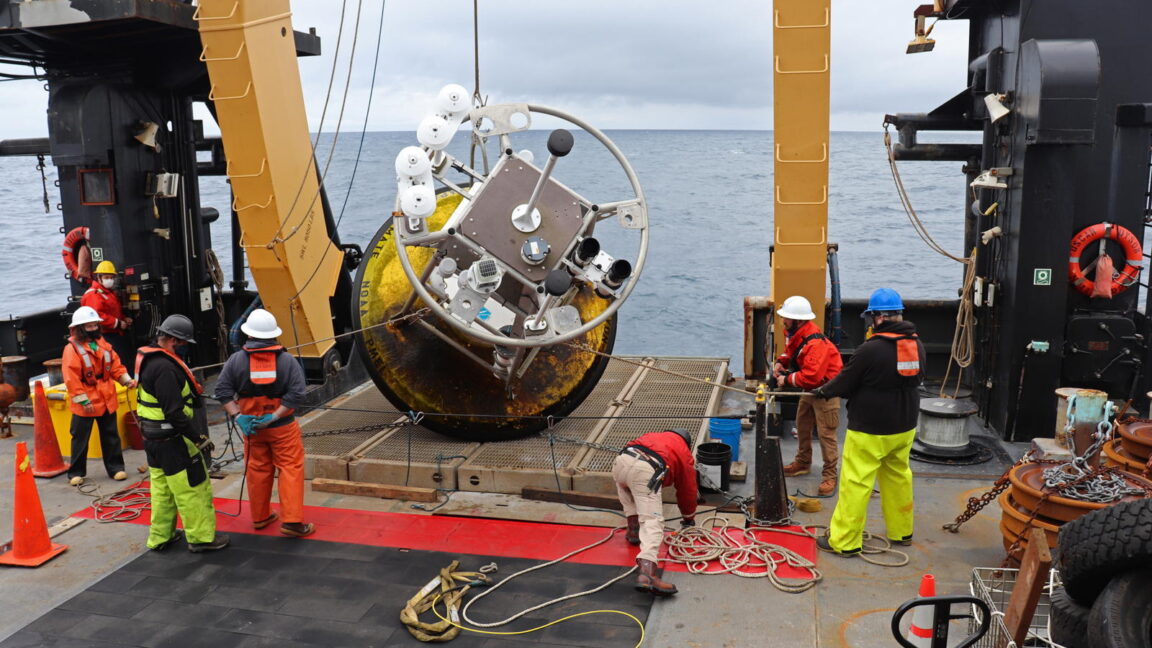
The National Science Foundation (NSF) plans to decommission the Ocean Observatories Initiative (OOI), a significant deep-ocean monitoring network, sparking concerns about its impact on Alaska's vital fishing industry and coastal communities. The OOI, a nearly $368 million investment, provides real-time data on ocean chemistry, temperature, salinity, and wave action, crucial for fishery management, hazard planning, and understanding climate change impacts.
Alaska, which experiences warming at twice the global average, relies heavily on this data. Michelle Stratton of the Alaska Marine Community Coalition highlighted the loss of Ocean Station Papa, a key component of the OOI, as detrimental to understanding current issues like salmon and crab population collapses and marine heatwaves. Rick Thoman, a climate specialist, likened the loss of data to driving blind on a dark freeway, emphasizing the importance of understanding the entire water column.
NSF spokesperson Cassandra Eichner stated the decommissioning aligns with a strategy for a "nimbler approach" to prioritize evolving scientific priorities and emerging technologies, assuring that all collected data will remain accessible. However, critics, including those associated with Project 2025, have viewed government-sponsored oceanic research as contributing to "climate alarmism." They argue that removing these instruments creates a data void that other nations, potentially China, could exploit.
Fisheries advocates like Tim Bristol of SalmonState view the decision as a step in the wrong direction, counterintuitive to the widespread call for more data and in-depth analysis. The loss of the OOI's comprehensive data could leave Alaska's isolated coastal villages, many with Indigenous populations, more vulnerable to intensifying storms and environmental changes, impacting not only biological resources but also economic stability, cultural practices, and community well-being.