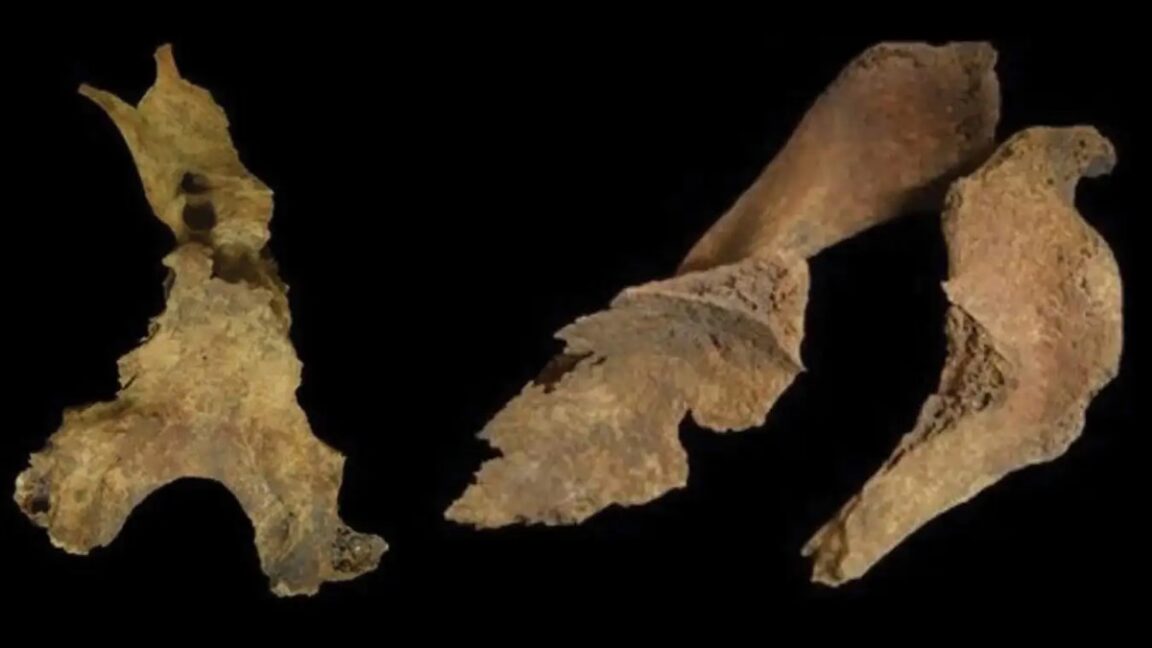
Key facts
- Marks on a female Iron Age skeleton suggest manipulation of the cranium, potentially for brain removal.
- Analysis of long bones indicates they were whittled into sharp tools and used as such.
- The manipulated bones were returned to the grave in their original anatomical positions.
- Genetic and isotopic data suggest a close familial relationship between the female and a young male buried separately.
- Both individuals likely originated from a coastal environment before relocating.
New research suggests that Iron Age Britons may have practiced postmortem manipulation of the dead, including the removal of brains and the repurposing of bones as tools. Analysis of a female skeleton revealed marks on the cranium that the study authors interpret as consistent with brain removal, though other archaeologists remain unconvinced.
Furthermore, four of the woman’s long bones exhibited marks previously identified as rodent gnawing. However, the researchers concluded these marks were more likely made by a sharp implement, with three bones whittled to a sharp edge and one worn down through use as a tool. Remarkably, all four bones were placed back in the grave in their correct anatomical positions.