Key facts
- Ukraine imposed sanctions on 44 individuals for participating in Russian State Duma elections in occupied territories.
- The sanctioned individuals are accused of facilitating the occupation of Donetsk, Luhansk, Kherson, Zaporizhzhia, Crimea, and Sevastopol.
- Some sanctioned individuals were previously elected to Russian-installed local councils.
- Russian propagandist Irina Kuksenkova and former Ukrainian lawmaker Yurii Onyshchuk are among those sanctioned.
- Russia held State Duma elections from September 18-20, with voting in occupied Ukrainian territories starting in late August.
- Ukraine's Presidential Commissioner for Sanctions Policy stated that elections do not change the status of occupied territories under international law.
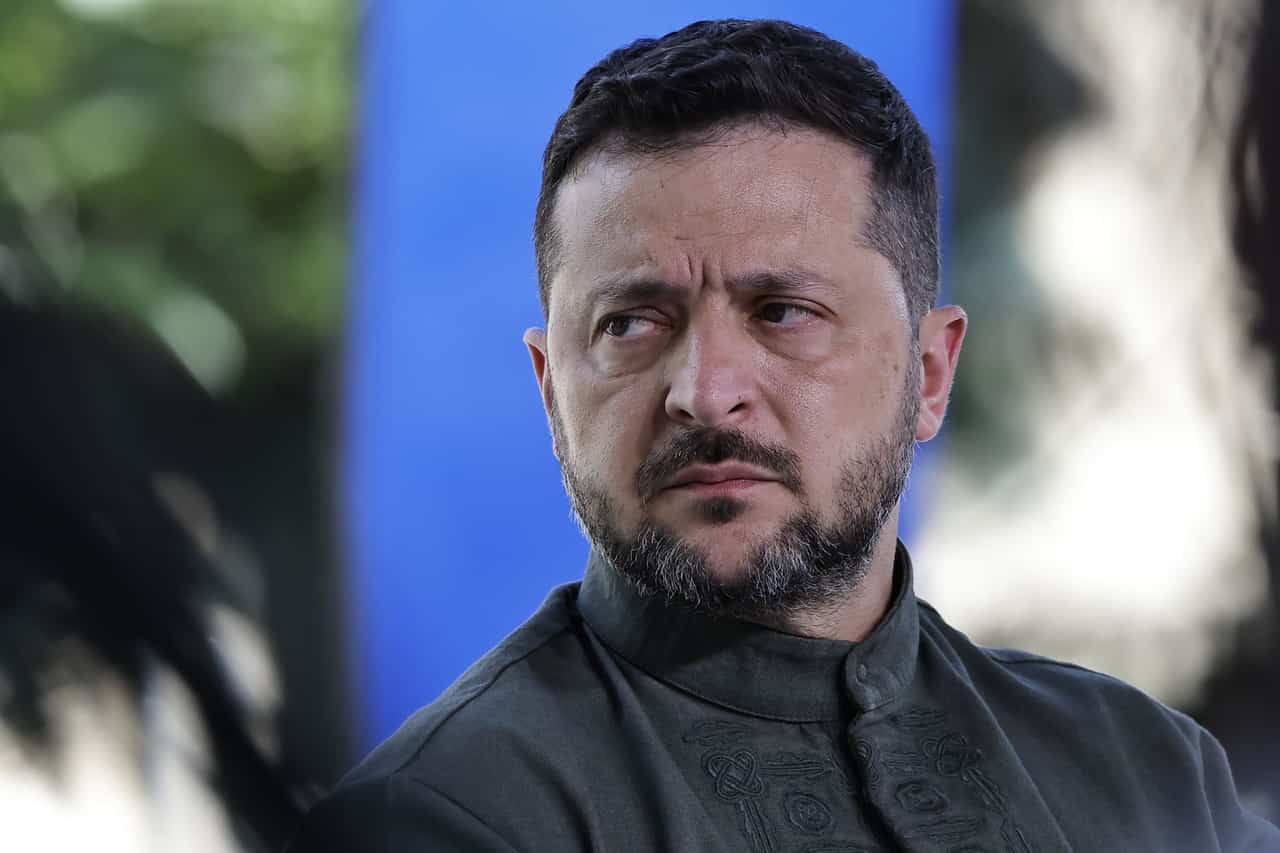
Ukrainian President Volodymyr Zelensky has enacted sanctions against 44 individuals who participated in Russia's State Duma elections held in occupied Ukrainian territories. The decision, based on a National Security and Defense Council decree, targets those deemed to be acting in Russia's interests and facilitating the occupation of regions including Donetsk, Luhansk, Kherson, Zaporizhzhia, Crimea, and Sevastopol.
Some of the sanctioned individuals had previously been elected to Russian-established local councils in the occupied areas, while others are accused of collaboration and aiding the occupation. Among them are Russian propagandist Irina Kuksenkova and former Ukrainian lawmaker Yurii Onyshchuk, who reportedly began cooperating with Russian authorities after Melitopol was occupied.
The elections, which took place from September 18 to 20, were the first for Russia's lower house of parliament in these territories following a mass issuance of Russian passports to Ukrainians. However, they were not the first Russian-organized votes, as referendums were held in September 2022, and regional elections in 2023, with Vladimir Putin declared winner in presidential elections in 2024.
Vladyslav Vlasiuk, Ukraine's Presidential Commissioner for Sanctions Policy, emphasized that under international humanitarian law, occupation does not confer sovereignty and that UN resolutions reaffirm Ukraine's territorial integrity. He stated that "neither 'elections,' 'referendums,' nor 'electoral districts' change that status."
According to Russian authorities, the ruling United Russia party secured over 57% of the vote with a 59% turnout. The Yabloko party, which opposed the war in Ukraine, was barred from participating. The Organization for Security and Co-operation in Europe (OSCE) was also denied permission to send an independent monitoring mission.
Ukraine's Foreign Ministry denounced the vote as a "farce," and the European Union, the United Kingdom, Switzerland, Norway, Australia, Canada, and New Zealand also condemned the elections.