Key facts
- Chinese Ambassador Xie Feng called the Xi-Trump rapport the "most valuable strategic asset" in US-China relations.
- Xie stated the leaders' personal connection helped keep China-US relations on course.
- Foreign Minister Wang Yi said the September 2026 summit advanced strategic stability.
- Xi and Trump agreed to an AI dialogue and a USD 30 billion reciprocal tariff reduction.
- The leaders also agreed on Iran's nuclear program and international waterway tolls.
- A memorandum of understanding on military crisis communication was agreed upon.
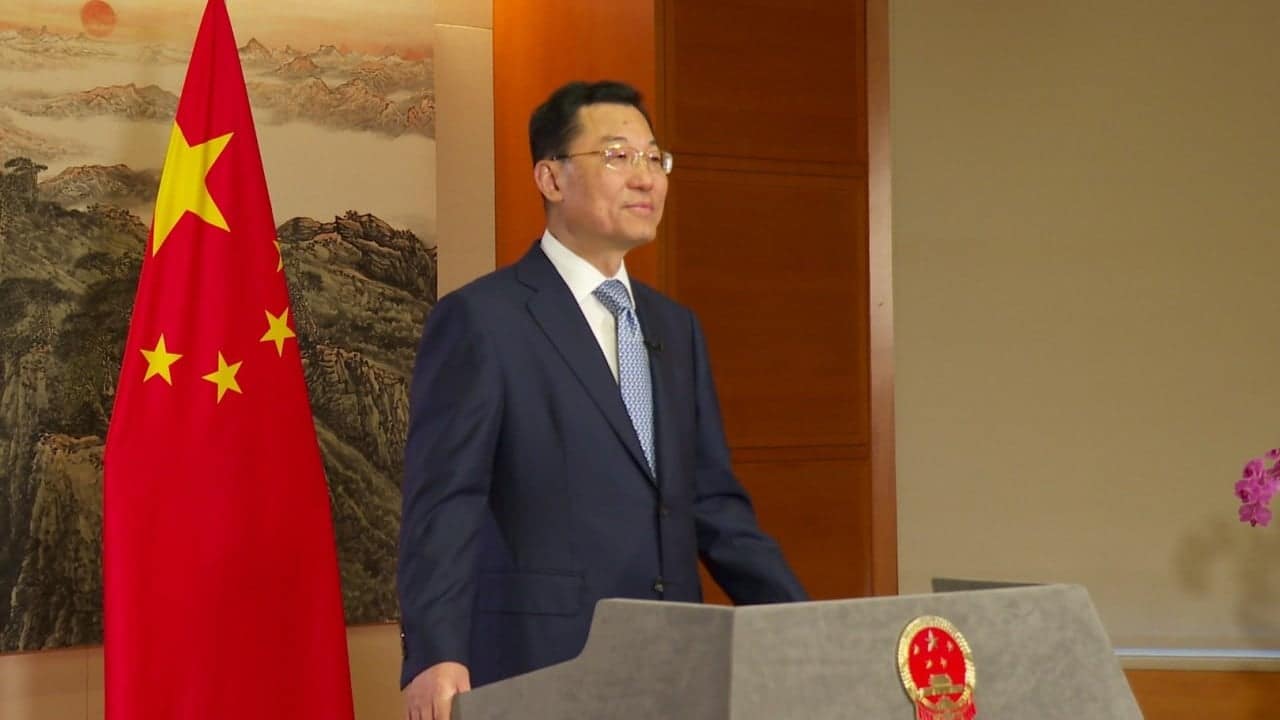
Chinese Ambassador to the United States Xie Feng on Wednesday described the personal rapport and "mutual respect" between Chinese President Xi Jinping and US President Donald Trump as the "most valuable strategic asset in our bilateral relations." Xie made the remarks during a speech marking National Day celebrations at the Chinese embassy in Washington, stating that their personal connection and in-depth dialogue have helped keep China-US relations on course at critical moments.
These sentiments echo those of Chinese Foreign Minister Wang Yi, who said that the recent summit meeting between Xi and Trump from September 23 to 25, 2026, had led to new progress in strategic stability between the two countries. Wang noted that the two leaders had maintained close exchanges, including three in-person meetings and five phone talks, fostering a pattern of interaction marked by mutual respect and sincerity.
During the summit, Xi and Trump agreed to establish a dialogue on artificial intelligence-related incidents, operationalize boards of trade and investment, and implement a USD 30 billion reciprocal tariff reduction arrangement. They also reached consensus on recommendations for more favorable tariff treatment for USD 30 billion of non-sensitive goods in each direction. The leaders also agreed that Iran can never have a nuclear weapon and that no country or institution can be allowed to impose tolls on international waterways. Furthermore, they agreed to sign a memorandum of understanding on strengthening crisis communications and preventing crises between the two militaries.
According to a White House fact sheet, the leaders agreed to use the term "super intelligence" rather than "artificial intelligence" to describe applicable emerging technologies. Trump also urged Xi to increase production of refined petroleum products to stabilize global supply. Wang stated that Beijing has always acted with goodwill regarding the fentanyl abuse problem in the US and that both heads of state tasked their law enforcement agencies with continuing to strengthen cooperation and jointly combat transnational crime.
Earlier, Trump had hailed a meeting with Xi as "amazing" and "12" on a 10-point scale, with the announced agreement including China resuming soybean purchases, suspending its rare earths export curbs for a year, and the US lowering tariffs on China by 10 percent. Trump also stated that tariffs on Chinese imports would be cut to 47 percent from around 57 percent by halving the rate of levies related to trade in fentanyl precursor chemicals to 10 percent from 20 percent.