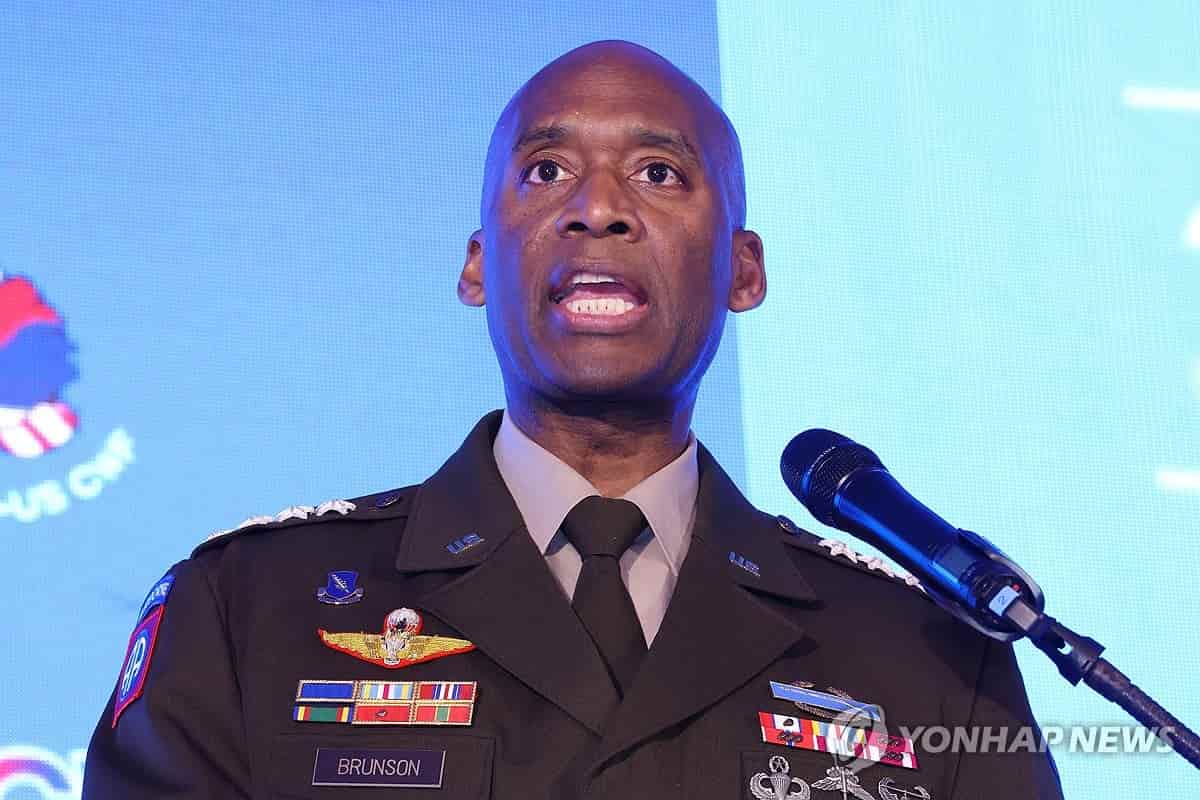
The top commander of U.S. Forces Korea (USFK), Gen. Xavier Brunson, reaffirmed on Wednesday that the transfer of wartime operational control (OPCON) from Washington to Seoul must strictly adhere to their agreed-upon "conditions-based" framework. Brunson's remarks were made during the Combined Warfighting Forum, hosted by the South Korea-U.S. Combined Forces Command (CFC) in Seoul.
The "conditions-based" OPCON transition plan requires South Korea to lead the future combined command, secure key strike capabilities to counter North Korean threats, and ensure a regional security environment conducive to the handover. South Korea is aiming to regain OPCON before the Lee Jae Myung administration's term ends in 2030, with a possibility of an earlier transfer next year.
However, there appears to be a divergence in timelines between the allies, as Brunson has previously stressed that political expediency should not supersede military readiness in the OPCON transition process. Wednesday's statements reinforce his stance on the matter.
Brunson also emphasized the importance of combined joint all-domain operations (CJADO), a U.S. military concept for synchronizing combat capabilities across land, air, sea, space, and cyberspace. He called for innovation and a willingness to adapt to changing warfare, stressing that interoperability is an immediate warfighting requirement that necessitates real-time data sharing, synchronized sensor-to-shooter links, and functional combined command and control architectures under fire.