Key facts
- Only two commercial vessels crossed the Strait of Hormuz on September 22.
- The Strait of Hormuz normally handles a fifth of the world's daily oil supply and a fifth of globally traded liquefied natural gas.
- Washington has employed three strategies of coercion against Iran in the past seven months: aerial bombardment, naval blockade, and direct escalation.
- The US military's ability to destroy targets does not guarantee desired political outcomes.
- The 'Vietnam Syndrome' represented a crisis of confidence in the efficacy and political utility of American military power.
- The US military deployed over half a million personnel to Indochina during the Vietnam War.
- The Paris Peace Accords were signed in January 1973, marking the departure of American combat forces from Vietnam.
- On August 2, 1990, Iraqi forces invaded Kuwait.
- The UN Security Council adopted Resolution 678 on November 29, 1990, authorizing military action to liberate Kuwait.
- Operation Desert Storm began on January 17, 1991, with overwhelming technological disparity.
- The ground war in Kuwait lasted only 100 hours after Operation Desert Storm began.
- The US military's experience in Afghanistan and Iraq demonstrated that battlefield supremacy did not grant the power to dictate future outcomes.
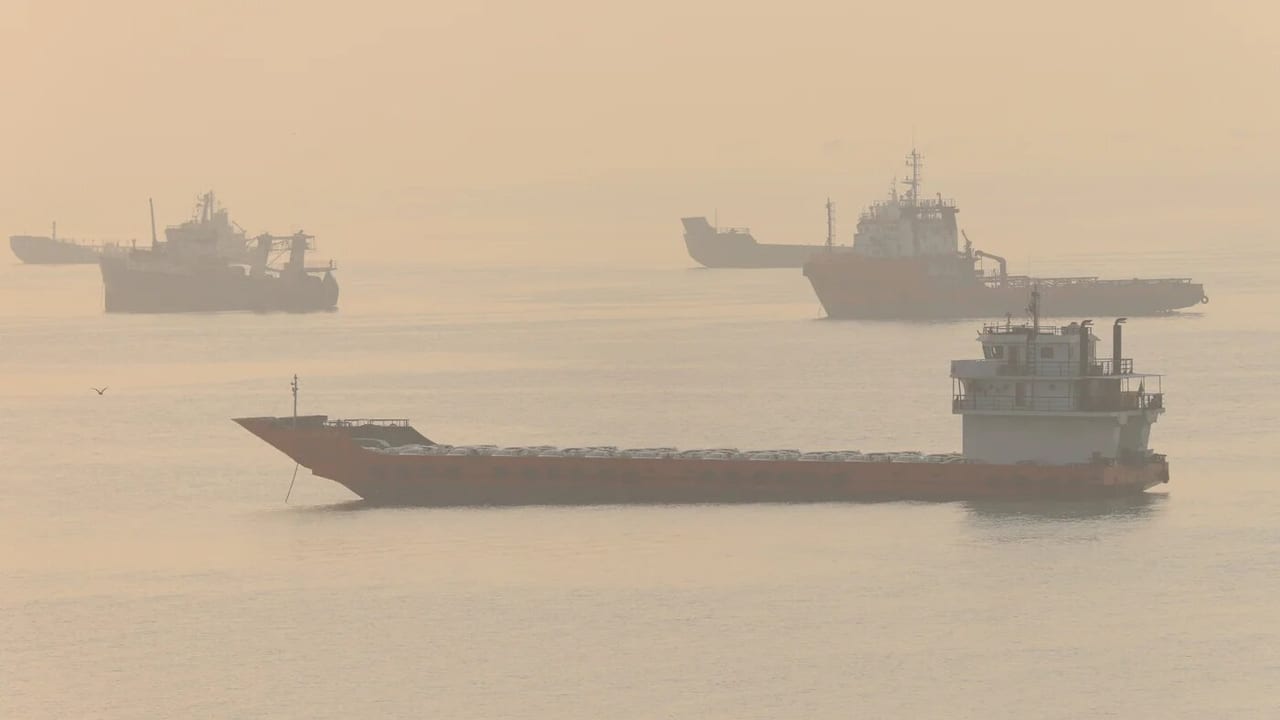
The Strait of Hormuz, a critical chokepoint for global oil and LNG trade, is experiencing significantly reduced traffic, with only two commercial vessels crossing on September 22. This quietude, despite the presence of US warships, underscores the limitations of American military power in achieving desired political outcomes, a lesson previously learned in Vietnam and the Gulf War.
Seven months into a conflict with Iran that began on February 28, 2026, Washington's attempts to restore normal passage through the strait via aerial bombardment, economic strangulation, and direct escalation have proven ineffective. The US military's capacity for destruction does not translate into the ability to compel adversaries like Tehran to accept its terms.
The article draws parallels between the current situation and historical events. The "Vietnam Syndrome" represented a deep-seated doubt about the efficacy and political utility of American military force, despite overwhelming technological superiority and immense casualties. The war demonstrated that superior firepower could not force a political settlement on an adversary willing to endure longer.
Sixteen years later, the 1991 Gulf War, following Iraq's invasion of Kuwait, was seen as a decisive victory that seemingly buried the Vietnam Syndrome. The US, leading a broad international coalition, achieved a swift liberation of Kuwait with minimal American casualties. President George HW Bush famously declared the US had overcome its post-Vietnam hesitancy.
However, the post-Cold War era, characterized by American unipolarity, led to a different kind of trap. The confidence gained from military victories like the Gulf War, Afghanistan, and Iraq, where regimes fell quickly, obscured the difficulty of determining post-conflict outcomes. The article suggests that the current situation in Hormuz is a reiteration of the lesson that military might alone cannot dictate political results.