US says F-47 will be first sixth-gen jet; China's J-36 and J-50 already flying
1 source↑ Market-relevant
IN SHORT
The US Air Force expects its F-47 sixth-generation fighter to enter production soon, but China has already been flight-testing two distinct next-generation prototypes, the J-36 and J-50, for about 18 months. While the US program is still in development, China's aircraft are observable, fueling debate about who leads in next-generation air power.
Key Numbers
18 monthsduration China has been flight-testing J-36 and J-50 prototypes
December 2024month China began testing sixth-generation aircraft
Who's Involved
Brigadier General Timothy Helfrich
US Air Force portfolio acquisition executive for fighters and advanced aircraft
China
testing two different next-generation combat aircraft
US Air Force
expects F-47 sixth-generation fighter to enter production soon
↳ Why This Matters
The race to develop and field sixth-generation fighter jets is a critical component of future air power dominance, with significant implications for global military balance and defence spending.
Key facts
China has been flight-testing two distinct sixth-generation fighter prototypes, the J-36 and J-50, for approximately 18 months.
The US Air Force's F-47 sixth-generation fighter is expected to enter production soon.
The J-36 and J-50 are tailless stealth designs believed to incorporate long range, advanced sensor fusion, and control of uncrewed aircraft.
The J-36 is thought to be a three-engine design intended for long-range, deep strike missions, while the twin-engine J-50 may be oriented towards carrier-based operations.
The US is pursuing parallel next-generation efforts with the Air Force's F-47 and the Navy's F/A-XX.
The US Air Force is nearing the production stage for its F-47 sixth-generation fighter, according to Brigadier General Timothy Helfrich, the service’s portfolio acquisition executive for fighters and advanced aircraft. However, China has reportedly been flight-testing two distinct next-generation combat aircraft, the J-36 and J-50, for approximately 18 months.
These Chinese aircraft, observed through civilian photography and analyst tracking, are described as tailless stealth designs. Pentagon assessments indicate that China began testing these prototypes in December 2024. The J-36 is believed to be a larger, three-engine aircraft designed for long-range missions, while the twin-engine J-50 is speculated to be intended for carrier operations. Both are thought to incorporate advanced sixth-generation features such as long range, sensor fusion, and the ability to control uncrewed combat aircraft.
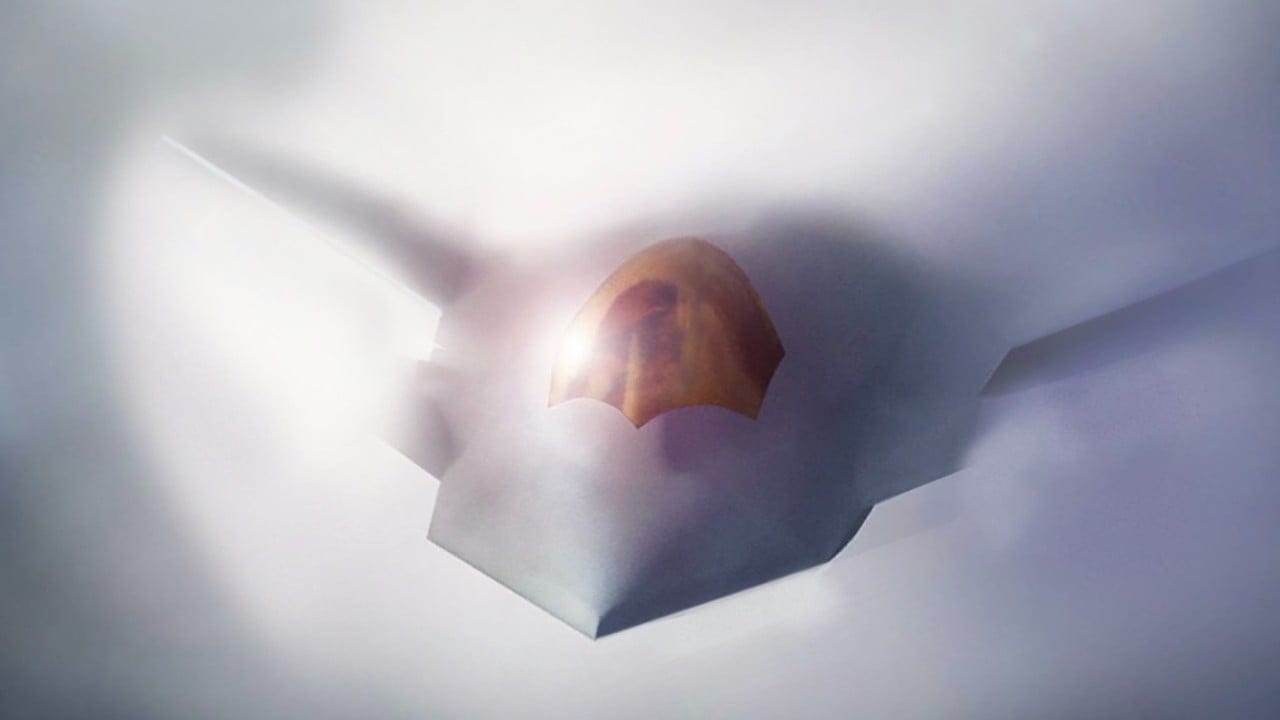
This observable tempo of testing in China contrasts with the more secretive development of the US F-47, which currently exists primarily as teaser images and is not expected to fly until 2028. The parallel development mirrors the US approach, which involves separate Air Force (F-47) and Navy (F/A-XX) programs for its next-generation fighter capabilities. Despite the difference in public visibility, the operational capability timelines for both nations' programs are considered to be closer than the optics suggest.
Frequently asked questions
Sixth-generation fighters are expected to feature long range, advanced sensor fusion, and the ability to control uncrewed combat aircraft as airborne teammates, alongside stealth capabilities.
The J-36 is believed to be a larger, three-engine aircraft designed for long-range strike missions, while the J-50 is a smaller, twin-engine design potentially intended for carrier-based operations.
The US F-47 is not expected to take to the air until 2028.
What Happens Next
01The US Air Force's F-47 is expected to enter production.
02The US Navy's F/A-XX program will continue development.
✉Newsletter
Pick the topics you care about. Get only what matters, on your cadence.
How It Developed
China began testing two sixth-generation aircraft, the J-36 and J-50, in December 2024.
The US Air Force anticipates its F-47 sixth-generation fighter will soon be ready for production.
Footage from late 2025 through early 2026 shows the J-36 in an intensive flight-testing phase.
A third J-36 prototype completed a milestone flight around December 25, 2025.