Key facts
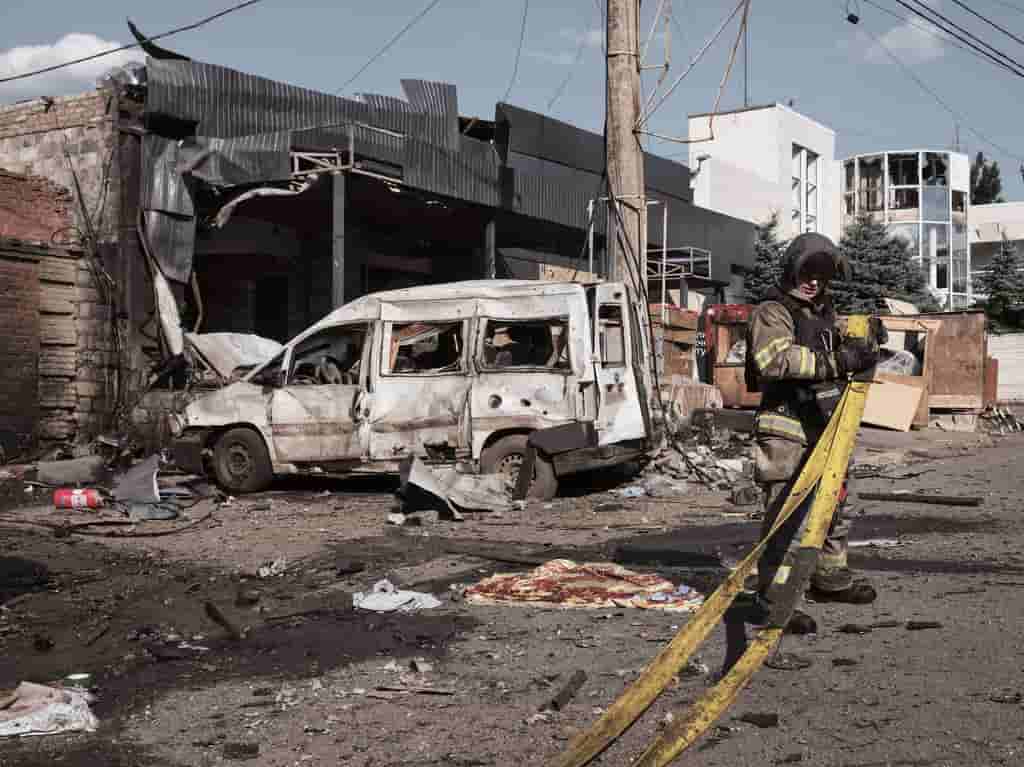
- Kramatorsk is experiencing intensified Russian attacks with glide bombs and drones.
- The city faces constant power and water outages.
- At least 13 people have been killed and 150 wounded in Kramatorsk this month.
- Russian troops are approximately 10 kilometers from the city.
- Local authorities have designated Kramatorsk as an area of active hostilities.
Kramatorsk, a city in Ukraine's Donetsk Oblast, is facing escalating Russian attacks, leading to civilian casualties and a growing sense of fear among its residents. The city, which previously served as a key logistics hub, is now under heavy bombardment from glide bombs and drones, with Russian troops reportedly closing in.
Vendors at the local market continue their trade despite the constant threat, with many having grown accustomed to the danger. Serhii, a 54-year-old vendor, noted that people no longer flinch at the sound of drones, highlighting the normalization of the conflict's impact on daily life. Despite the risks, some residents remain, driven by necessity or a deep connection to their homes.
Local authorities have officially designated Kramatorsk as an area of active hostilities, enabling decisions regarding civilian safety and evacuation. This month alone, at least 13 people have been killed and approximately 150 injured. Anti-drone nets are visible across the city, offering partial protection for vehicles.
Military analyst Michael Kofman described the situation as Kramatorsk suffering the fate of other Donbas cities, becoming increasingly unsafe for civilians. The city, historically an industrial center, has experienced occupation and attacks since 2014, but the current intensity of bombardment is particularly concerning.
Residents like Lyudmila Drovko, a supermarket clerk, are enduring constant attacks, with her workplace being destroyed by a Russian glide bomb. Despite the hardships, including power and water outages, she remains in Kramatorsk, citing family ties and a reluctance to leave her home. The city's infrastructure is strained, with hospitals reportedly closing and a general sense of uncertainty about the future.