Key facts
- President Zelensky appointed Andrii Biletskii and Denys Prokopenko to lead new defense groupings in eastern Ukraine.
- The appointments aim to bolster defenses in Donetsk Oblast against advancing Russian forces.
- Biletskii leads the Third Army Corps, and Prokopenko commands the First Corps Azov.
- Both commanders have significant combat experience, including in critical battles like Mariupol and Kyiv.
- Russian forces are intensifying attacks on key cities in Donetsk Oblast.
President Volodymyr Zelensky has appointed commanders Andrii Biletskii and Denys Prokopenko to lead reorganized units tasked with reinforcing Ukrainian positions in Donetsk Oblast, as Russian forces intensify their advance on key eastern cities. Biletskii, founder of the Azov Battalion and leader of the Third Army Corps, and Prokopenko, commander of the First Corps Azov who led forces during the Mariupol siege, are recognized for their combat experience and the capabilities of their units.
Both commanders and their units have been deployed to heavily contested sectors and are noted for adopting NATO-style military doctrine. The appointments are seen as a move to allow greater strategic planning scope for the new top commander, Mykhailo Drapatyi, potentially shifting away from previous micromanagement styles. Russian forces are actively advancing on cities like Kostiantynivka, Kramatorsk, and Sloviansk, increasing attacks to prepare for further offensives.
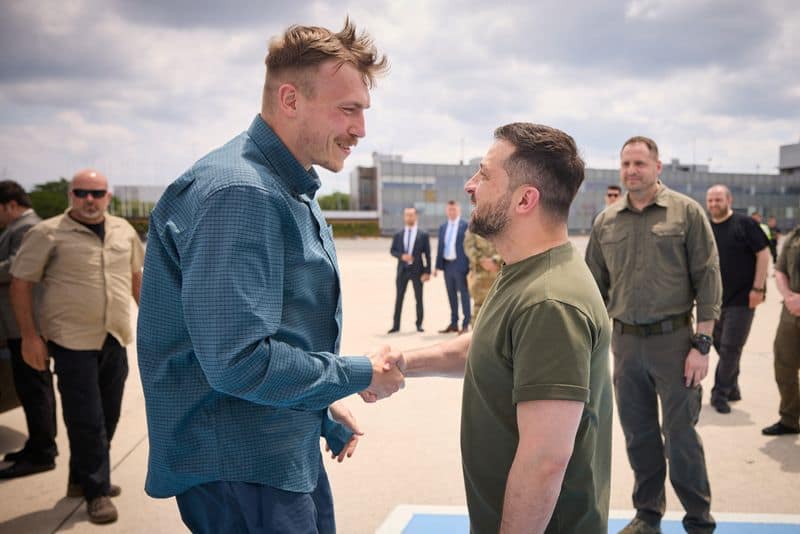
During a visit to the Oleksandrivka sector, Zelensky met with Prokopenko, Biletskii, Drapatyi, and other military leaders to discuss the battlefield situation and the need to improve Ukrainian forces' effectiveness. Zelensky emphasized strengthening defenses for Zaporizhzhia and the surrounding region, which faces constant Russian air attacks.