Key facts
- Leaders from Wales, Scotland, and Northern Ireland signed a memorandum of understanding calling for UK government preparation for independence referendums.
- The leaders stated that Westminster should not block democracy by refusing a referendum if the public demands one.
- Scottish and Welsh first ministers called for immediate referendums in their respective nations.
- Support for Wales to leave the UK is polling at 32% and growing.
- The Scottish National Party leader, John Swinney, described the agreement as 'an important moment in the history of devolution'.
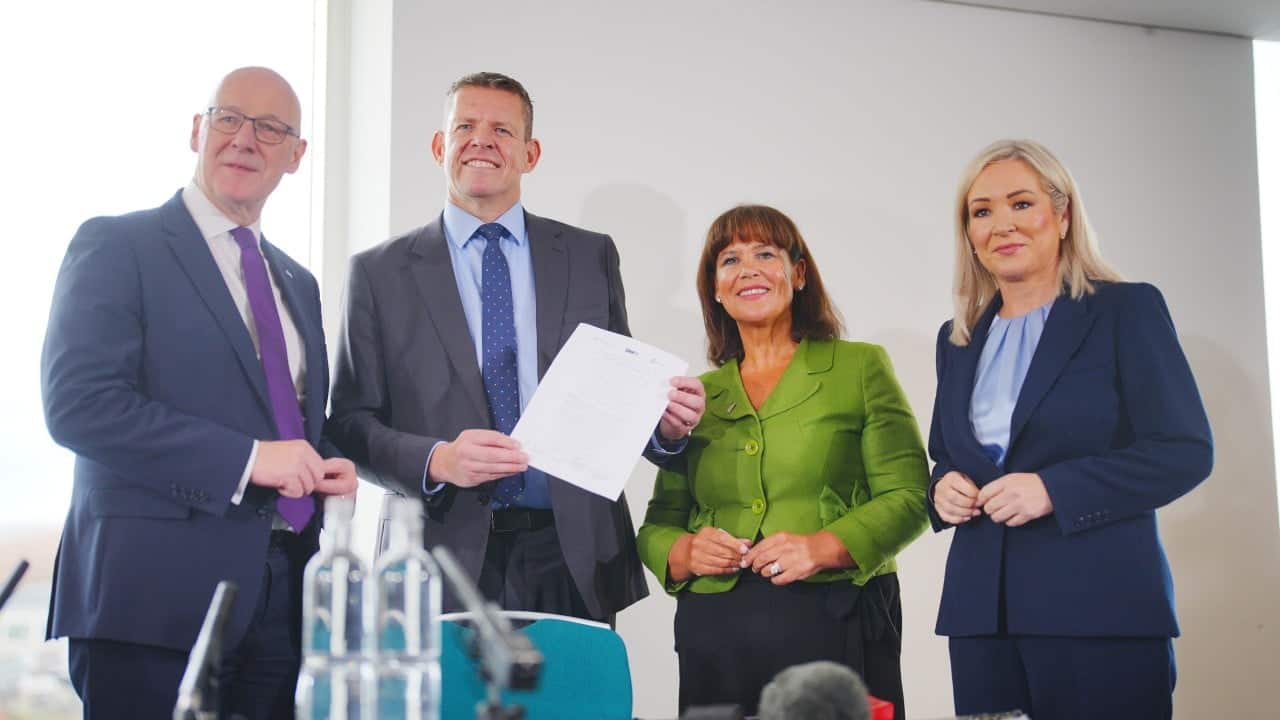
Leaders from Wales, Scotland, and Northern Ireland have jointly called on the UK government to prepare for independence referendums. The memorandum of understanding, signed in Cardiff, asserts the right of their nations to seek constitutional change and states that no Westminster government should block democracy by refusing a referendum if the public demands one.
Scottish National party leader John Swinney and Sinn Féin vice-president Michelle O’Neill called for immediate referendums in Scotland and Northern Ireland, respectively. Plaid Cymru leader Rhun ap Iorwerth declined to give a timetable for a Welsh referendum, though current polling indicates 32% support for Wales to leave the UK, with growing strength.
The agreement, signed alongside Irish opposition leader Mary Lou McDonald, is seen as a significant step in the ongoing conversation about devolution and the UK's constitutional future. The leaders expressed a growing recognition that Westminster is not working and that power needs to be brought closer to people and communities.
Recent interventions, including Donald Trump's comments on a united Ireland and discussions around referendums in Scotland and Northern Ireland, have added salience to the call for constitutional change. The leaders also noted the rise of centre-left nationalist parties in government across Scotland, Wales, and Northern Ireland since May 7.
While the parties have different timelines and domestic pressures, the agreement is viewed as more than just a symbolic gesture. It acknowledges the momentum gained by parties like Plaid Cymru, which recently ended a long period of Labour control in the Welsh Senedd. The Scottish and Welsh first ministers also signed the Cardiff Agreement, outlining shared priorities such as child poverty and economic growth.