Key facts
- U.S. President Donald Trump has revived his call for the United States to control Greenland.
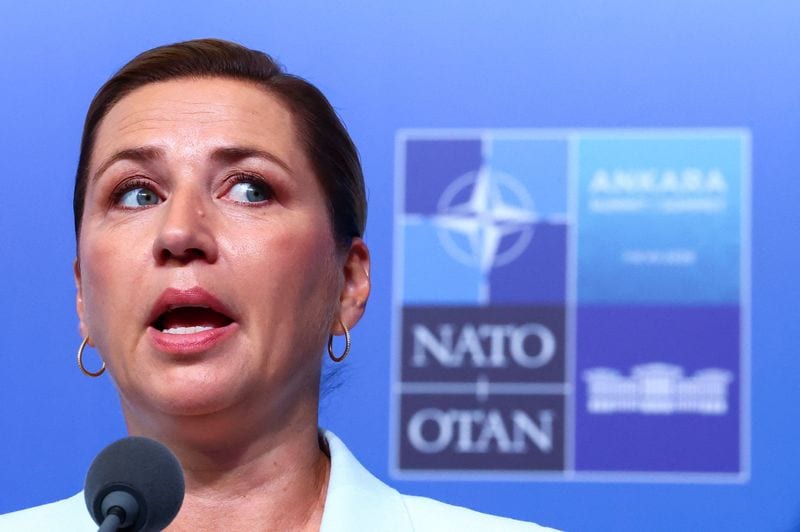
- Danish Prime Minister Mette Frederiksen affirmed the country's commitment to defending all NATO territory, including Greenland.
- Trump cited security and strategic importance as reasons for U.S. control of the Arctic island.
- European Union spokesman Olof Gill stated decisions about Greenland's future are for Greenlanders and Danes.
- Spain downplayed Trump's remarks after he called for cutting off all trade with the country.
U.S. President Donald Trump has reignited his campaign to acquire Greenland, citing its strategic Arctic location and mineral wealth as crucial for U.S. security and global protection, and to deter threats from Russia and China. He expressed disappointment with NATO allies' perceived underinvestment in Arctic security.
Denmark's Prime Minister Mette Frederiksen firmly rejected Trump's proposal, stating her country is ready to defend "every inch of NATO", including Greenland. She emphasized NATO's purpose of mutual defense. European Union spokesman Olof Gill supported Denmark's position, asserting that decisions about Greenland's future belong to Greenlanders and Danes.
Trump's remarks, which included historical comparisons and threats to cut off trade with Spain, were made at a NATO summit in Ankara. While NATO leaders, including chief Mark Rutte, sought to downplay divisions and highlight increased defense spending, Trump's comments on Greenland soured optimism. Several European leaders, such as Norway's Jonas Gahr Støre and Lithuania's Gitanas Nausėda, publicly distanced themselves from Trump's claims, reaffirming Greenland's status as part of Denmark and belonging to its people.
Greenland's strategic importance has grown due to its location above the Arctic Circle, vital for North American defense and guarding Arctic and North Atlantic approaches. Climate change is opening new Arctic trade routes and increasing geopolitical competition for resources, with China declaring itself a 'near-Arctic state' and Russia expanding its military presence in the region. The U.S. operates the Pituffik Space Base in Greenland, supporting missile warning and space surveillance for the U.S. and NATO.