Key facts
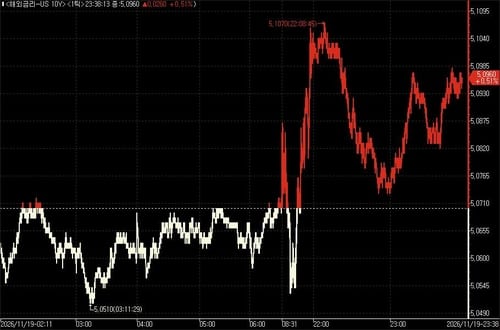
- The 10-year Treasury yield was 5.094% at 9:17 a.m. Eastern Time on November 19, up 2.80 basis points from the prior 3 p.m. reference rate.
- The 2-year yield rose 4.30 basis points to 4.843% and the 30-year yield climbed 1.80 basis points to 5.430%.
- E-Mini Nasdaq 100 futures rose 1.77% and E-Mini S&P 500 futures gained 1.01% on expectations for Anthropic's listing.
- The October FOMC minutes said almost all policymakers agreed further rate hikes would be necessary if the economy evolves as expected.
- A JPMorgan team led by chief economist Michael Feroli projected three consecutive 25 basis point Fed rate hikes in December, January and March.
The 10-year Treasury yield stood at 5.094% at 9:17 a.m. Eastern Time on November 19, up 2.80 basis points from the 3 p.m. reference rate of the previous trading day, Yonhap Infomax reported, citing its intraday overseas interest rate screen. The 2-year yield rose 4.30 basis points to 4.843% and the 30-year yield climbed 1.80 basis points to 5.430%. Treasury yields and prices move inversely.
The move followed a rally in US stock index futures on expectations for Anthropic's listing. E-Mini Nasdaq 100 futures rose 1.77% and E-Mini S&P 500 futures gained 1.01%. Anthropic is expected to list with a market capitalization exceeding $1 trillion and to be included early in the Nasdaq 100 index, which the report said is anticipated to drive inflows from passive funds tracking that index.
Earlier in the week, Treasury yields had reflected demand for government debt. The 10-year yield fell for three consecutive sessions and the 30-year yield declined for two straight days as bond buying intensified while US equity markets tumbled on concerns over widespread computing outages.
The hawkish tone of the October Federal Open Market Committee minutes, released the previous afternoon, also put upward pressure on bond yields. According to the minutes, almost all policymakers agreed that further rate hikes would be necessary if the economy evolves as expected.
In a report released on November 19, a strategy team led by JPMorgan chief economist Michael Feroli projected that the Federal Reserve would raise its benchmark rate by 25 basis points three consecutive times in December, January and March, citing sticky inflation that it said validates the need for additional tightening. The spread between 10-year and 2-year yields narrowed to 25.1 basis points from 26.6 basis points the previous day.