Key facts
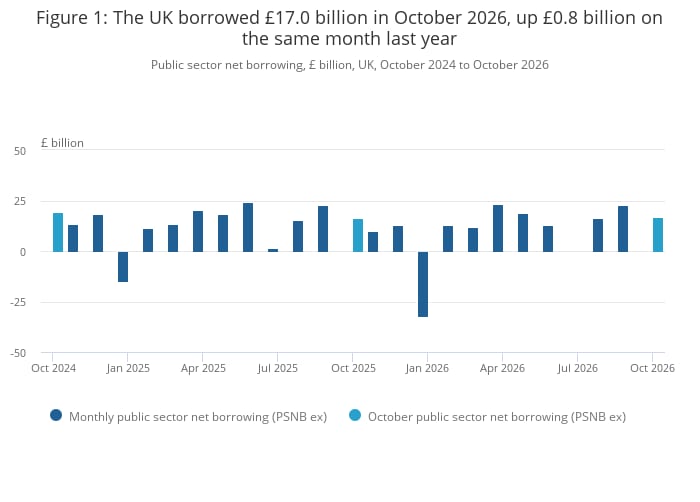
- Public sector net borrowing was £17.0 billion in October 2026, £0.8 billion more than in October 2025, the ONS said.
- City economists had forecast borrowing of £18 billion, according to The Guardian.
- Central government debt interest payable was £11.2 billion in October 2026, £2.8 billion more than a year earlier.
- Borrowing in the financial year to October 2026 was £111.3 billion, £7.3 billion less than a year earlier.
- Public sector net debt was provisionally estimated at £3,058.3 billion, or 95.8% of GDP, at the end of October 2026.
- The OBR said the figures were broadly in line with its forecast but warned of several risks.
UK public sector net borrowing was £17.0 billion in October 2026, £0.8 billion more than in October 2025, the Office for National Statistics said. City economists had forecast borrowing of £18 billion, according to The Guardian, so the outturn was below expectations.
Central government debt interest payable was £11.2 billion in October 2026, £2.8 billion more than a year earlier, the ONS said. Borrowing in the financial year to October 2026 was £111.3 billion, £7.3 billion less than in the same period a year earlier.
Public sector net debt was provisionally estimated at £3,058.3 billion at the end of October 2026, equal to 95.8% of GDP, the ONS said. That was 1.9 percentage points higher than a year earlier and at levels last seen in the early 1960s.
The Office for Budget Responsibility said the latest figures were broadly in line with its October forecast for a £1.1 billion fall in total borrowing for the 2026-27 financial year, The Guardian reported. The watchdog warned of several risks, including the sharp rise in energy costs and public spending on cost of living support measures.
Grant Fitzner, the ONS chief economist, said borrowing so far in the financial year remained lower than in the same period last year, with receipts growing faster than spending. He said monthly borrowing was up on last October, partly because of higher debt interest.
Chief secretary to the Treasury Emma Reynolds said Britain was showing resilience despite the global impact of the conflict in Iran, The Guardian reported. She said the government would cut waste and bureaucracy by reprioritising spending and making public services more efficient with AI.