Key facts
- Yodchanan said restrictions on export and transit of rare earth mining precursor chemicals would run through National Security Council mechanisms.
- The Ministry of Industry and Ministry of Commerce will review regulations to set controls, Yodchanan said.
- Deputy prime minister and foreign minister Sihasak Phuangketkeow is scheduled to join ministerial talks with China and Myanmar on November 24.
- Yodchanan said Myanmar was asked to gather information ahead of the talks and that China had expressed willingness to cooperate.
- Yodchanan said he would visit Chiang Rai on November 22 to meet residents and protest groups over water pollution.
Thailand plans to stop exporting chemicals used in rare earth mining to Myanmar, deputy prime minister Yodchanan Wongsawat said on November 21, 2026, after a meeting of the National Disaster Prevention and Mitigation Command at Government House. He said the move was aimed at leveraging every possible avenue and targeted production of rare earth elements bound for Myanmar and other relevant countries, without elaborating.
According to a Nation Thailand report, Yodchanan said the government would pursue restrictions on the export and transit of precursor chemicals associated with rare earth mining and processing through mechanisms under the National Security Council. The Ministry of Industry and Ministry of Commerce will review relevant regulations to set appropriate controls while limiting unintended consequences for legitimate businesses, he said.
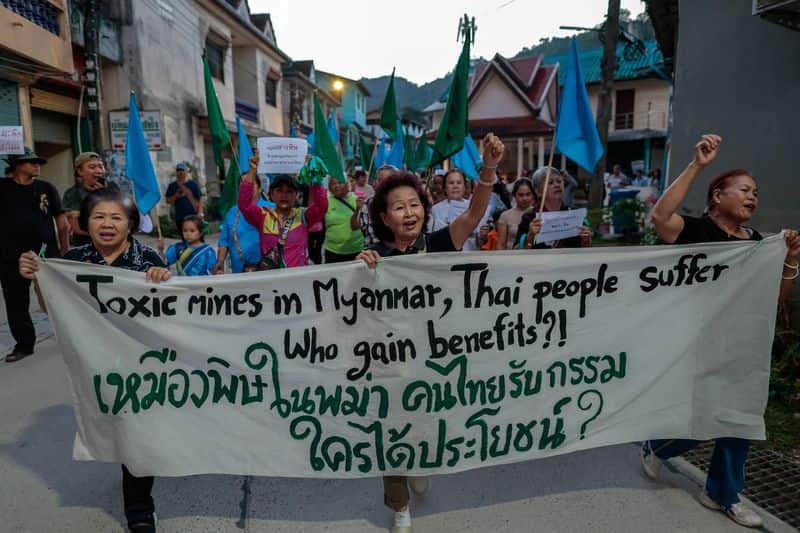
The measures are part of a response to concerns about toxic substances, particularly arsenic, entering rivers in northern Thailand from upstream areas, the Nation Thailand report said. Thailand, China and Myanmar plan to hold talks on the issue between November 24 and 26, the government has said. Deputy prime minister and foreign minister Sihasak Phuangketkeow is scheduled to join ministerial-level discussions with representatives of both countries on November 24, with working-level meetings on November 25 and 26, according to the report.
Yodchanan said Thailand had already contacted the governments of China and Myanmar about the contamination and that Myanmar had been asked to gather relevant information ahead of the discussions. He said Chinese President Xi Jinping had acknowledged Thailand's concerns about the uncertain origins of the chemicals involved and which parties might be responsible, and that China had expressed willingness to cooperate.
The government said on November 22, 2026, that it plans to designate the Thai side of the Kok River a pollution control zone to tackle toxic contamination. Yodchanan said he would visit Chiang Rai on November 22 to meet residents and protest groups concerned about water pollution, and that the government intended to begin small-scale pilot projects to assess check dams and sediment-control structures before considering wider use, the Nation Thailand report said.