Key facts
- GFS Bern projected 54% of voters backed easing arms export rules, against 46% opposed, for broadcaster SRF.
- The amendment would allow sales to 36 Western countries even when they are at war.
- Ukraine would not benefit; the government says exports there remain prohibited.
- Parliament voted in 2025 to ease the restrictions, prompting opponents to force a referendum.
- Marianne Binder, a Centre Party official, welcomed the projection but called Ukraine's exclusion a "fly in the ointment".
- Amnesty International Switzerland condemned the move as "the dismantling of the main safeguards governing Swiss arms exports".
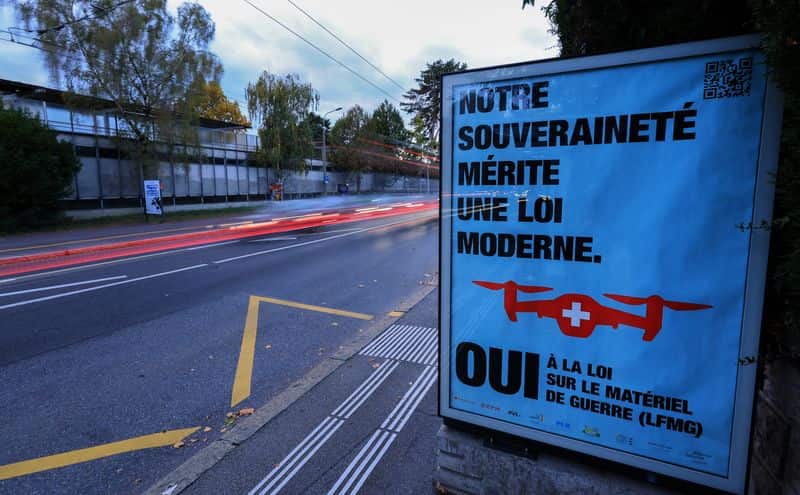
Swiss voters on November 29, 2026 narrowly approved an amendment to the War Materiel Act easing curbs on weapons exports, according to an initial projection by polling institute GFS Bern for public broadcaster SRF. The projection put the Yes side at 54% and the No campaign at 46%. Swiss President Guy Parmelin told a press conference in Bern that the people approved the amendment with 54.3% of votes in favor and turnout of 48%, and said the Federal Council was pleased with the result.
The amendment would allow sales to 36 Western countries even when they are at war, including all members of the European Union and the European Free Trade Association except Liechtenstein, which has no army, as well as Argentina, Australia, Japan, Canada, New Zealand, the US and the UK. It would also allow the sale of weapons without requiring the purchasing country to seek permission to sell them on to a third country. Switzerland currently does not export to nations involved in armed conflicts and requires consultation if clients intend to transfer Swiss-made armaments elsewhere.
Ukraine would not benefit: the government says exports there remain prohibited. Russia is subject to an embargo, and neutrality laws prevent Switzerland from sending Kyiv weapons directly or indirectly. European countries have been blocked by Bern from sending previously bought Swiss ammunition and combat vehicles to aid Kyiv.
Parliament voted in 2025 to ease the restrictions after Russia's 2022 invasion of Ukraine increased concerns about European security, and Swiss arms exports fell in 2023 and 2024 as European buyers looked to other sources. Left-wing parties and NGOs forced a referendum under Switzerland's system of direct democracy, arguing the move endangered Swiss neutrality and was a surrender to the arms lobby.
Marianne Binder, a Centre Party official and Yes supporter, welcomed the projected result but described Ukraine's exclusion as a "fly in the ointment". She told broadcaster SRF: "Apparently, the population has recognized that the security situation has completely changed and that Switzerland is a country within the Western security architecture." NGOs including Amnesty International Switzerland condemned the move, describing it as "the dismantling of the main safeguards governing Swiss arms exports".