Key facts
- At least four oil and gas tankers have diverted from the Strait of Hormuz due to renewed vessel attacks and heightened security concerns.
- U.S. President Donald Trump warned of additional strikes on Iran and declared a ceasefire deal 'over.'
- Maritime authorities raised the threat risk for vessels in the Strait of Hormuz to 'severe.'
- Oil prices surged over 5% to more than $78 a barrel, the highest in nearly two months.
- Gas prices in Europe also saw a significant surge following the collapse of the ceasefire.
- Iran claimed to have targeted U.S. military sites in Bahrain and Kuwait.
Oil markets experienced their sharpest price increase in nearly two months following a series of attacks on fossil fuel tankers near the Strait of Hormuz, prompting U.S. President Donald Trump to declare the ceasefire deal with Iran 'over.' Brent crude, the global benchmark, rose by 5% to over $78 a barrel, marking its highest price since the U.S. and Iran negotiated a ceasefire last month.
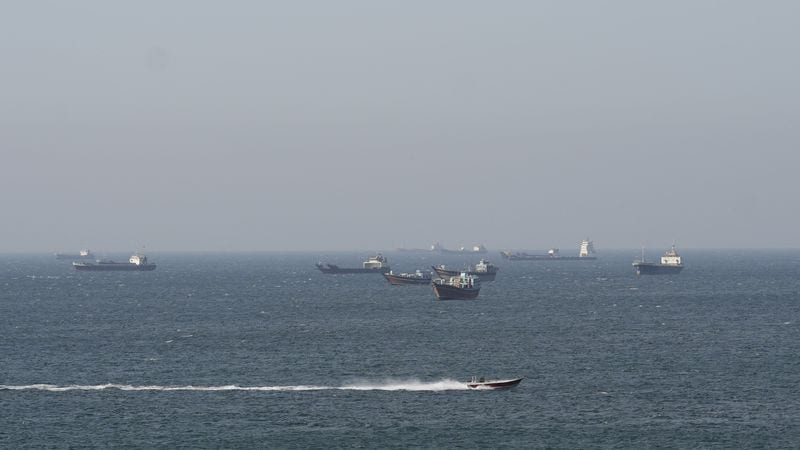
Iran launched attacks on at least three tankers transiting the strait within 48 hours, including a vessel carrying approximately 8 million cubic feet of liquefied natural gas, a cargo considered at high risk of explosion. Ship-tracking data indicates that at least four oil and gas tankers have reversed course from transiting the strait, hindering efforts to normalize oil and gas flows through this critical trade route after months of disruption.
Analysts note that tanker traffic through the Strait of Hormuz has effectively ceased, reflecting heightened risk perception. The situation's true test will emerge after the burial ceremony of Iran's supreme leader, Ayatollah Ali Khamenei, later this week, after which it will be evident if a diplomatic resolution remains possible.
Global oil prices had previously fallen from highs exceeding $110 a barrel in late May due to increased tanker transit and hopes for a resolution to the conflict disrupting approximately 20 million barrels of oil per day from Gulf producers. The collapse of the ceasefire has also reignited a 5% surge in European gas market prices, with the benchmark Dutch contract increasing to €49.00 per megawatt hour and the UK equivalent rising to 116.75 pence per therm.
This resurgence in energy prices risks increasing household costs, which have already faced the steepest rise in summer energy bills in four years. Sustained higher market costs could lead to increased gas and electricity prices in the winter and higher prices at the pump. While market analysts are hesitant to forecast a return to oil prices above $100 a barrel, citing the market's adaptability, the original crisis saw a $56 decline in Brent prices during May and June. The net loss from the original estimated 20 million barrels a day disruption is now considered to be around 3.1 million barrels a day, due to alternative supply routes, clandestine crossings, higher production from unaffected producers, emergency crude stock releases, and U.S. sanctions waivers.