Key facts
- South African cities experienced widespread business closures and reduced public activity due to planned anti-immigrant protests.
- Thousands of foreign nationals have fled their homes, seeking safety and repatriation to their home countries.
- Protests involved marches with participants brandishing sticks and clubs, and chanting slogans against foreigners.
- The country has a history of xenophobic violence, with significant incidents in 2008 and 2015.
- The South African government has increased crackdowns on undocumented immigration and warned against vigilantism.
South African cities experienced significant disruption and fear as anti-immigrant protests took place across the country, leading many foreign nationals to flee for safety.
In Durban, streets were unusually quiet with shuttered shops as tensions remained high. Protesters, some carrying sticks and clubs, marched through the city center chanting "Abahambe!" meaning "They must go!". Campaign groups had set a deadline for undocumented immigrants to leave the country, fueling fears of violence.
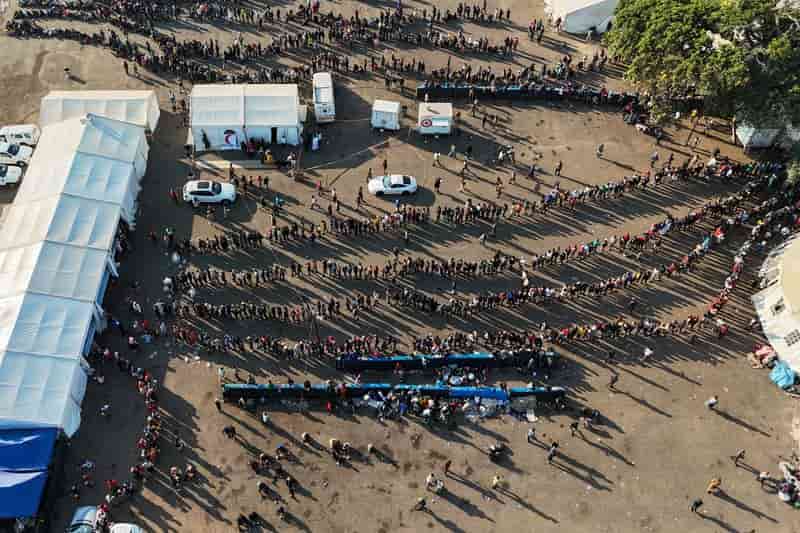
Thousands of people, including families with legal documentation, have fled their homes in recent weeks, sleeping in makeshift camps and seeking repatriation. Several African governments have organized transport for their citizens, with over 25,000 repatriated so far. In Pietermaritzburg, hundreds of families camped outside an abandoned building after a 29-year-old Malawian national was killed following a protest.
Migrants like Jackson Makungwa from Malawi, who had lived legally in South Africa for years, expressed frustration over an inability to renew work permits and fear of escalating violence. Lydia Mpingashato, a Zimbabwean migrant, reported being threatened and dismissed from her job, forcing her to return home. Many immigrants reported being evicted by landlords fearing retaliation.
South Africa has a history of xenophobic violence, with major incidents in 2008 and 2015. The country hosts approximately 2.4 million foreign nationals. Many South Africans blame immigrants for high unemployment and crime rates. Philile Ntuli from the South African Human Rights Commission noted that xenophobia often emerges at the intersection of economic insecurity, high unemployment, and weak governance.
In response to the unrest, the government has intensified its crackdown on undocumented immigration, arresting over 50,000 individuals since January. President Cyril Ramaphosa met with protest leaders, urging them to avoid vigilantism. Authorities deployed heavy security across the country, with police and private security visible in armored vehicles. Despite organizers' calls for peace, some marchers made veiled threats and directed hostility towards immigrant communities.
Advocacy groups argue the government is not doing enough to hold perpetrators of xenophobic violence accountable, citing difficulties in reporting cases to the police. Migrants expressed a loss of hope and a sense of being unwelcome, with some fearing the situation will worsen after the June 30 deadline.