Key facts
- South Korea, the U.S., and Japan have commenced the five-day Freedom Edge joint military exercise.
- The exercise is designed to counter North Korean nuclear and missile threats.
- Freedom Edge is proceeding on schedule despite recent scaling back of U.S.-South Korea drills.
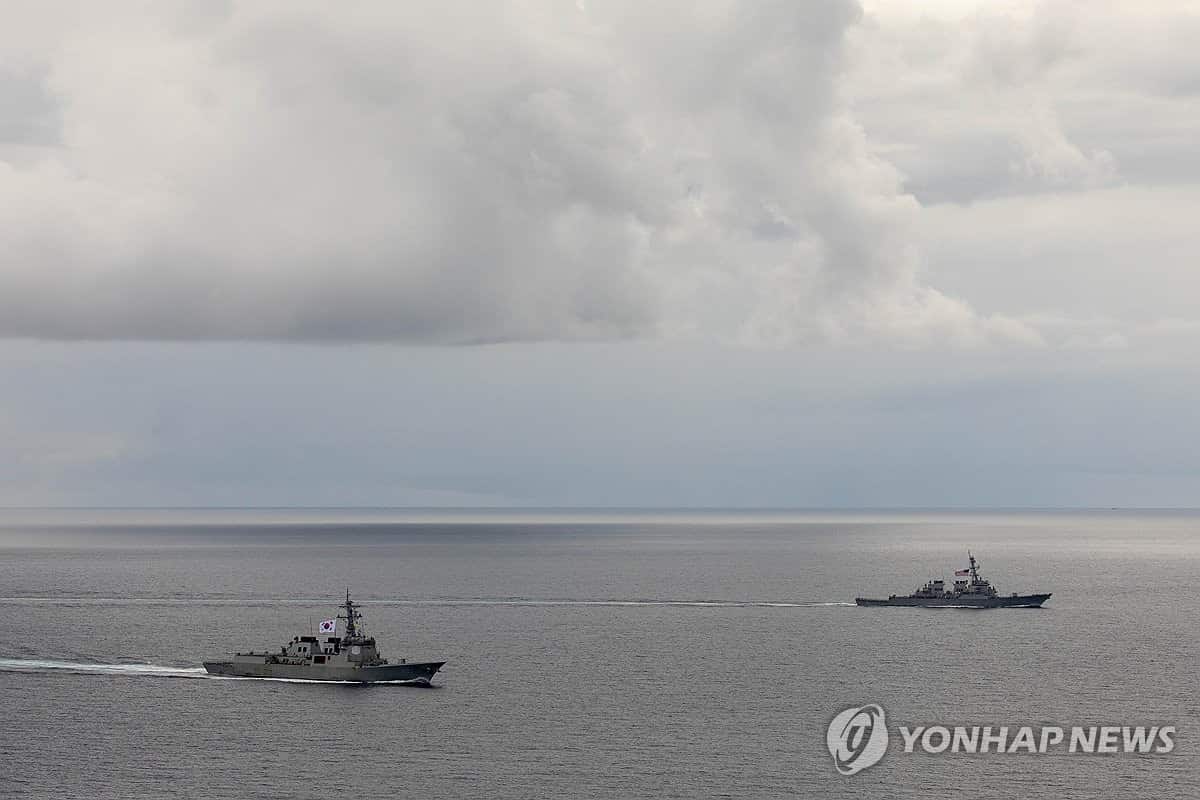
- The drills will involve maritime and air assets from all three nations, including Aegis destroyers.
- Emphasis is placed on cyber defense coordination and joint response capabilities across multiple domains.
South Korea, the United States, and Japan commenced their five-day Freedom Edge joint military exercise on Monday, emphasizing their commitment to trilateral security cooperation in the face of escalating North Korean threats. The drills, which began in international waters east and south of South Korea's Jeju Island, are proceeding on schedule despite recent reductions in key Seoul-Washington exercises ordered by U.S. President Donald Trump.
This year's Freedom Edge marks its fourth iteration and is specifically designed to counter North Korea's nuclear and missile programs. Rear Adm. Kim Ji-hoon of South Korea's Joint Chiefs of Staff stated that the exercise aims to enhance deterrence and response capabilities, sending a clear message to North Korea, including its recently commissioned naval destroyer, the Kang Kon.
Despite the absence of a U.S. aircraft carrier, which Lt. Gen. Stephen Jost, commander of U.S. Forces Japan, attributed to global military needs rather than a reduced commitment to the region, the exercise's scope and objectives remain unchanged. This year's drills place a particular emphasis on cyber defense coordination and joint medical training.
The three nations will deploy significant maritime and air assets, including six Aegis-equipped destroyers, maritime patrol aircraft, fighter jets, and refueling tanker aircraft. The U.S. Navy's USS Benfold has arrived in Busan, South Korea, potentially participating in the drills. The exercise is intended to bolster operational readiness and joint response capabilities across maritime, air, and cyber domains, reinforcing regional peace and stability.