Key facts
- A Russian convoy of four vessels delivered supplies to Tartous port on September 7.
- This was the first resupply mission since a new agreement on Russia's military presence in Syria was reached.
- The agreement involves civilian facilities being transferred to Syrian control and military sites becoming joint training centers.
- The cargo ship Sparta, under U.S. sanctions, unloaded ammunition.
- Russia uses Hmeimim airbase and Tartous port to project power in the Mediterranean, Middle East, and Africa.
A convoy of Russian naval and cargo vessels delivered supplies to coastal facilities in Syria last week, marking the first such mission since Damascus and Moscow agreed on the future of Russia's military presence in the country. The operation, which arrived at Tartous port on September 7, indicates Moscow's continued resupply efforts to key bases under a new deal.
The agreement, reached on August 9, stipulates that civilian facilities used by Russia will be transferred to Syrian control, while military sites will be converted into joint training centers, with Russian forces remaining at the bases. Russia utilizes Hmeimim airbase and Tartous port for projecting power across the Mediterranean, Middle East, and Africa, with Tartous serving as its sole naval repair and replenishment facility in the Mediterranean.
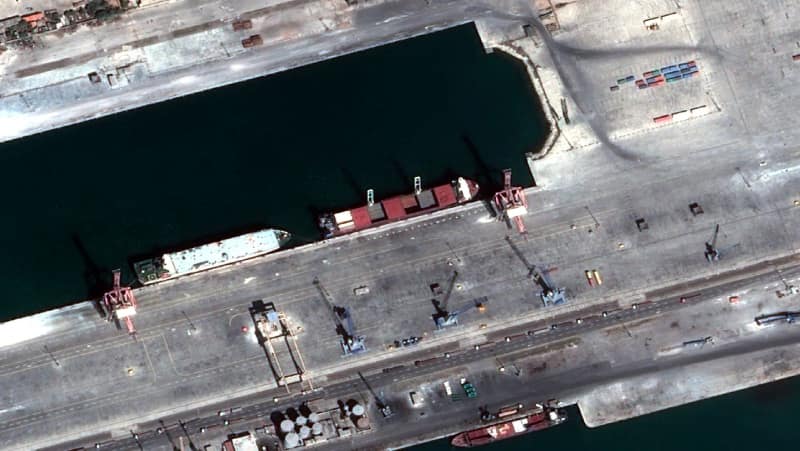
Satellite imagery verified by Reuters showed the Sparta cargo ship and the Akademik Pashin oiler docked at Tartous on September 8. A Reuters reporter observed the two vessels docked on September 9, while the General Skobelev tanker remained offshore. A Syrian military source and a Russian-Syrian businessman familiar with the operation stated that the Sparta unloaded ammunition destined for Hmeimim and Tartous, though Reuters could not independently confirm the contents or recipients. The fourth vessel in the convoy was identified by maritime intelligence firm SynMax as the Admiral Levchenko destroyer. The vessels stopped transmitting their signals after crossing the Strait of Gibraltar, with Reuters tracking their movement via satellite imagery.