Key facts
- Fewer than five Russian military aircraft entered the zone early on November 24 and changed course after South Korea's military responded, the Joint Chiefs of Staff said.
- Two Tu-160 strategic bombers and two Su-35 fighters took part, reaching 13 nautical miles off Ulleungdo, Businesskorea reported.
- South Korea's military requested the Ulleung County alert through the Ministry of the Interior and Safety, Businesskorea reported.
- Defense Ministry data obtained in 2024 by Rep. Boo Seung-chan showed Russian entries of fewer than 10 in 2020, around 10 in 2021, around 20 in 2022 and around 10 in 2023, The Korea Herald reported.
- Shin Beom-chul of the Sejong Institute said Moscow may be seeking leverage over Seoul on sanctions relief or Ukraine.
Russian military aircraft entered South Korea's air defense identification zone without prior notice on November 24, the third such entry in eight days, and approached Ulleungdo in the East Sea, prompting South Korea to scramble fighter jets. The aircraft did not violate South Korean sovereign airspace, according to The Korea Herald.
Businesskorea reported that two Tu-160 strategic bombers and two Su-35 escort fighters entered the zone at around 7:40 a.m. and reached a point 13 nautical miles off Ulleungdo by 7:52 a.m., just over a nautical mile from South Korea's 12-nautical-mile territorial airspace boundary. South Korea's military, judging an airspace violation imminent, requested a civil defense alert for Ulleung County through the Ministry of the Interior and Safety, the first known preemptive alert of its kind, and F-15K fighters scrambled from Daegu. The Russian formation turned east and withdrew before reaching South Korean airspace, and the Joint Chiefs of Staff said no violation occurred.
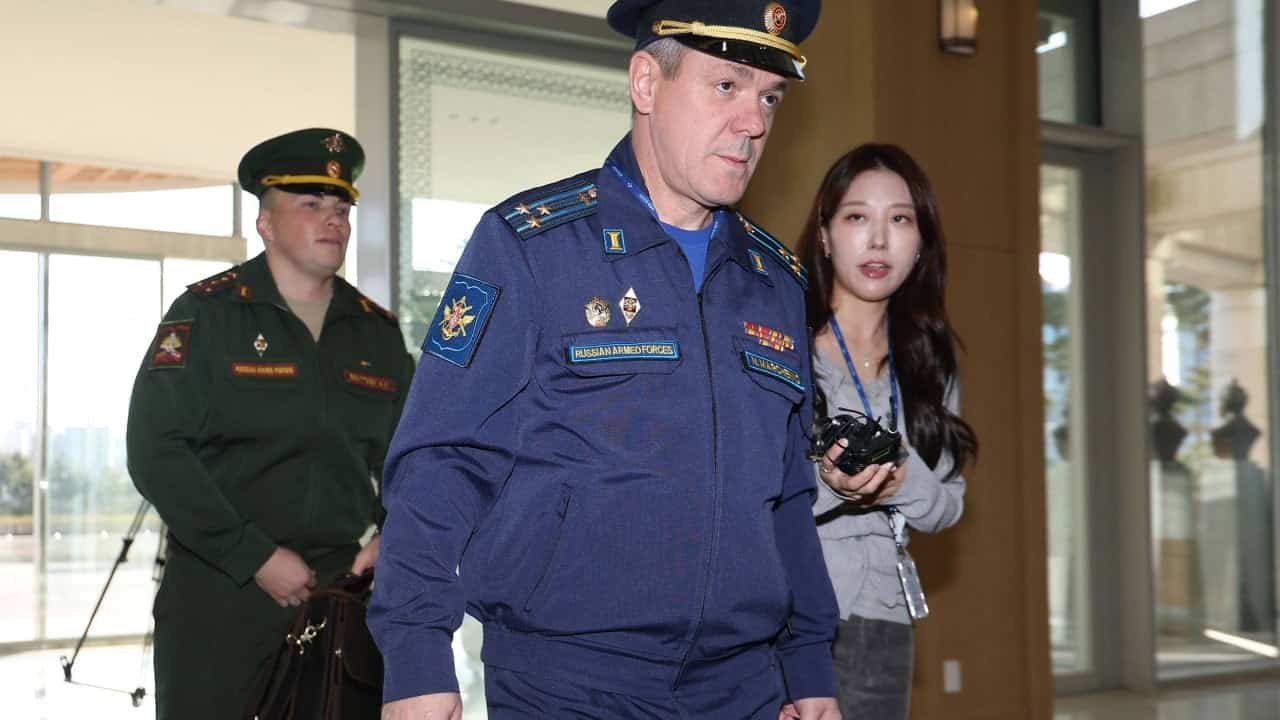
The Defense Ministry summoned Russian defense attache Col. Nikolai Marchenko on November 24 to protest. Asked whether the entry was deliberate and whether he had known in advance, Marchenko replied, "No comment," The Korea Herald reported. The Foreign Ministry said separately it had expressed regret to its Russian counterpart and urged it to prevent a recurrence.
According to Defense Ministry data obtained in 2024 by Rep. Boo Seung-chan of the Democratic Party of Korea, Russian military aircraft entered the zone fewer than 10 times in 2020, around 10 times in 2021, around 20 times in 2022 and around 10 times in 2023, The Korea Herald reported. South Korea requires foreign military aircraft to give advance notice before entering the zone, but Russia does not recognize the requirement.