Key facts
- At least 3,000 Africans from 37 countries have been recorded fighting for Russia in Ukraine.
- Recruitment schemes involve offering jobs in Russia, confiscating passports upon arrival, and pressuring recruits into military contracts.
- The fatality rate among African recruits is reported to be 22%, with training as short as 1 to 1.5 weeks.
- Russia denies illegal recruitment, asserting enlistment is voluntary.
- Russian-linked networks control mining operations in CAR, Mali, and Libya, using gold to circumvent sanctions.
- Kenya has shut over 600 recruitment agencies following public anger and an agreement with Russia to halt recruitment.
Russia has been drawing citizens from across Africa into its war against Ukraine, with at least 3,000 individuals from 37 countries recorded as fighting or having fought for Moscow. This recruitment often involves deceptive job offers, confiscation of passports upon arrival in Russia, and pressure to sign military contracts written in Russian, with little to no legal or translation assistance.
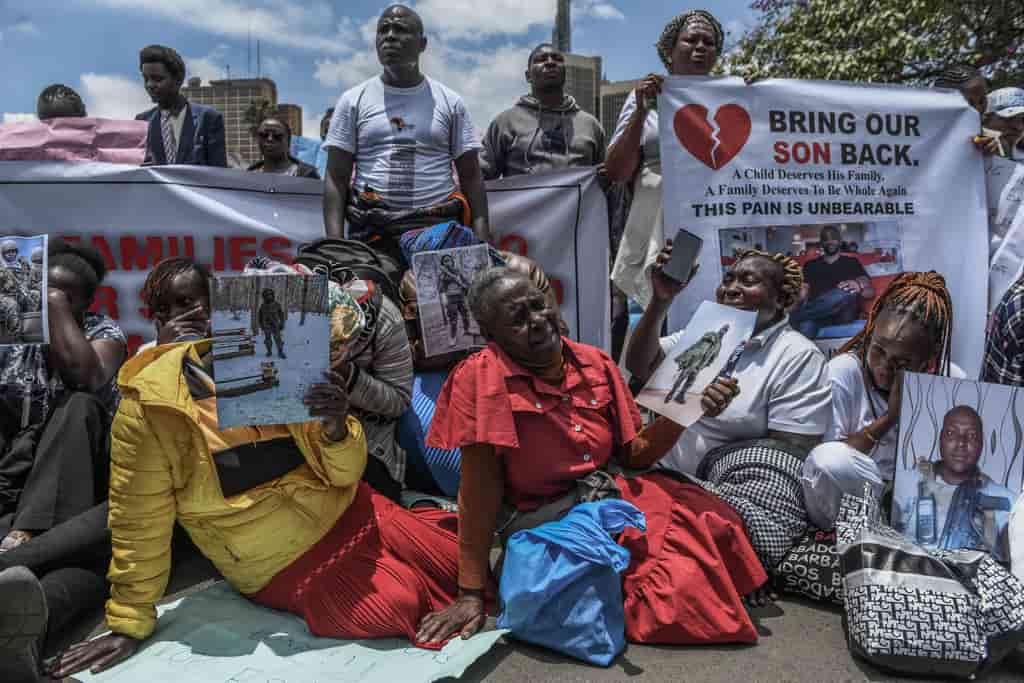
Families of those recruited, such as Winnie Rose Wambui searching for her brother Samuel Maina who believed he was going to Russia for a security job, have protested demanding answers and the return of their relatives. The human cost is severe, with reports indicating a 22% fatality rate among African recruits who undergo training as short as one to 1.5 weeks.
Russia denies illegal recruitment, maintaining that enlistment is voluntary and lawful. However, reports suggest state-linked companies, intermediaries, military structures, embassy officials, and even the Russian Orthodox Church have been involved in encouraging travel to Russia for military service. Duduzile Zuma-Sambudla, daughter of former South African President Jacob Zuma, has also been implicated in recruiting men without their consent.
Beyond manpower, Russia leverages its ties to Africa for economic purposes, using African resources and financial channels to circumvent Western sanctions. African gold, for instance, has been identified by the U.S. as a tool for sanctions evasion, with Russian-linked networks controlling mining operations in countries like the Central African Republic, Sudan, and Mali. These operations often involve moving gold through the UAE before re-entering global markets. Russia also supplies military equipment and fertilizers to various African nations.
This entanglement comes at a cost to African states, including exposure to secondary sanctions, strained relations with Western partners, and the human toll of recruitment. While Russia frames itself as an anti-colonial ally, the benefits appear to be concentrated among political elites, with little improvement in stability in some regions. African countries are responding with varied caution; Kenya has forced Russia to halt recruitment and shut down hundreds of agencies, while Nigeria has warned its citizens against foreign conflicts. The article questions what African countries truly gain from their relationship with Russia, especially as sanctions scrutiny intensifies.