All NewsEducationTV
Equities & FundsCrypto & Digital AssetsAI & TechnologyBusiness & CorporateUS Politics & PolicyGeopolitics & Global RiskMacro, Rates & FXCommodities & EnergyEuropean Politics & MarketsAsia-PacificReal Estate & Property
All NewsHome
← Back to AI & Technology

Researchers Develop Method for Simultaneous Dual Genetic Code Translation

Created at 26 Aug · 3:11 PM1 source↑ Market-relevant
IN SHORT

Scientists have devised a method to operate two separate genetic codes concurrently, bypassing the need to re-engineer existing cellular machinery. This breakthrough, demonstrated in a cell-free system, could accelerate synthetic biology research by enabling the creation of proteins using alternative genetic codes without disrupting the cell's primary functions.

Key Numbers

twogenetic codes operated simultaneously

Who's Involved

George Church
Lead researcher and synthetic biologist
Researchers Develop Method for Simultaneous Dual Genetic Code Translation

↳ Why This Matters

This research offers a creative solution to the long-standing difficulty of altering the genetic code, potentially accelerating synthetic biology and the creation of novel proteins without disrupting essential cellular functions.

Key facts

  • Researchers have developed a method to run two separate genetic codes simultaneously within a single system.
  • This approach avoids altering the primary genetic code essential for all cellular proteins.
  • The technique involves creating distinct populations of transfer RNAs (tRNAs) and ribosomes.
  • Modified ribosomes can translate messenger RNA using alternative tRNAs, producing different proteins.
  • The work was demonstrated in a cell-free translation system, not within a living cell.

The fundamental genetic code, used by nearly all life to translate DNA into proteins, is notoriously difficult to alter because cellular machinery is deeply dependent on it. Previous attempts to modify genetic codes or introduce new amino acids required extensive re-engineering of every gene in an organism's genome. Now, researchers led by George Church have devised a novel approach that sidesteps this challenge by enabling the simultaneous operation of two distinct genetic codes.

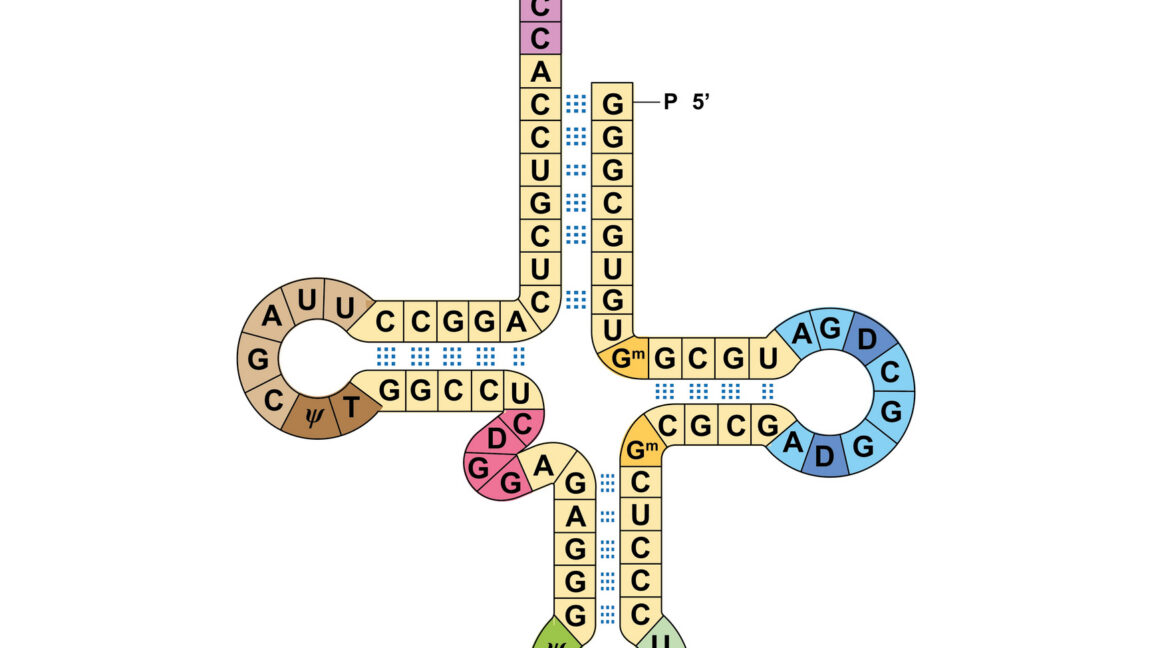
The breakthrough hinges on a specific interaction between ribosomes and transfer RNAs (tRNAs). Ribosomes are cellular machinery that read messenger RNA (mRNA) to build proteins, using tRNAs to deliver the correct amino acids. The researchers identified a region on the ribosome and tRNA that pairs up, ensuring the correct tRNA is used. By modifying this pairing sequence on both the tRNA and the ribosome, they created two separate populations: one using the standard genetic code and the other using a modified code.

This system was tested in a cell-free environment. The team successfully charged modified tRNAs with amino acids, though at a lower efficiency than normal. They then demonstrated that modified ribosomes could correctly translate mRNA using these alternative tRNAs. Crucially, they designed an mRNA that could be read by both standard and modified ribosomes, resulting in the production of two different proteins based on which genetic code was employed.

While this method was not tested in a living cell, it represents a significant advancement for synthetic biology. It offers a way to explore alternative genetic codes and engineer new proteins without disrupting the essential functions of the host cell, potentially accelerating research in areas like drug discovery and biomaterial development.

Frequently asked questions

The genetic code is a set of rules used by living cells to translate information encoded within DNA into specific protein sequences. It uses sequences of three DNA bases (codons) to specify each amino acid.

The genetic code is fundamental to all cellular processes, and altering it requires re-engineering numerous genes and cellular components, such as transfer RNAs and the enzymes that charge them, to avoid producing malformed proteins.

The researchers created two separate populations of transfer RNAs and ribosomes that can interact with each other. This allows for the simultaneous translation of genetic information using two different codes without altering the cell's primary genetic machinery.

This technique could accelerate synthetic biology research, enable the creation of novel proteins with new amino acids, and potentially lead to advancements in areas like drug discovery and biomaterials.

What Happens Next

01Further research may explore implementing this dual-code system within living cells.
02The method could be used to streamline testing and screening of alternative genetic codes.

How It Developed

Researchers identified a key interaction point between ribosomes and transfer RNAs (tRNAs).
They proposed modifying this interaction to create distinct populations of tRNAs and ribosomes.
A method was developed to charge modified tRNAs with amino acids, albeit at lower efficiency.
Researchers confirmed that modified ribosomes translated messenger RNA using alternative tRNAs.
A system was created to translate a single messenger RNA using two different genetic codes simultaneously.
Two distinct proteins were produced from the same messenger RNA using separate genetic codes and ribosomes.

Sources

T1
Researchers get two genetic codes to work at the same timevar abtest_2169133 = new ABTest(2169133, 'impression');Ars Technica

Related Stories

New bootloader grants full control over Meta Quest headsets
25 Aug · 4:11 PM
Chemistry research aims to prevent glow-in-the-dark pigments from fading
25 Aug · 7:05 PM
Chinese scientists develop self-exercising muscle grafts
26 Aug · 1:06 PM
Psychiatry's Diagnostic Manual to Integrate Biology
26 Aug · 2:06 PM
Researchers Shrink AI Model, Making It Smarter Than Original
25 Aug · 8:51 PM