Key facts
- Three people were killed and 15 wounded in violence ahead of the Philippines' regional parliamentary election.
- Voting began Monday in the Bangsamoro Autonomous Region in Muslim Mindanao (BARMM) under heightened security.
- The election is a key test of a peace process aimed at ending decades of separatist conflict.
- Delays occurred in Basilan province due to pre-shaded ballots.
- President Ferdinand Marcos Jr. called the election a 'defining moment' for the region and country.
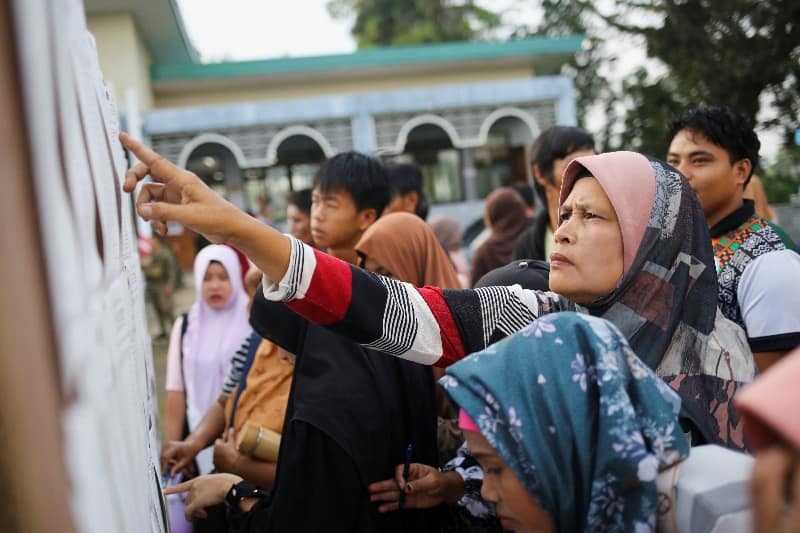
Voting commenced on Monday in the Philippines' Muslim-majority south, with enhanced security measures in place following pre-election violence that resulted in three deaths and 15 injuries. The election for the Bangsamoro Autonomous Region in Muslim Mindanao (BARMM) parliament is considered a critical assessment of initiatives aimed at achieving lasting peace and development in an area previously plagued by separatist conflict and extremism.
The Commission on Elections (COMELEC) placed Cotabato City under its control after an argument at a polling station escalated into gunfire on Sunday, according to local reports. COMELEC spokesperson John Rex Laudiangco stated that voting was proceeding smoothly across BARMM and that widespread unrest was not anticipated due to expanded checkpoints and rapid security force deployment. However, voting in a municipality in Basilan was delayed due to the discovery of pre-shaded ballots, necessitating reprints.
Nearly 2.4 million voters are registered for this election, which international partners and peace monitors view as a significant test of the sustainability of regional autonomy granted under a 2014 peace accord between Manila and Muslim separatists. The autonomy was intended to end a conflict that caused over 120,000 deaths and displaced approximately 2 million people, while also facilitating the growth of extremist groups in the region.
President Ferdinand Marcos Jr. described the election as a 'milestone' and a 'defining moment' for the region and the nation, urging voter participation. The election concludes a transition process initiated by the agreement with the Moro Islamic Liberation Front (MILF) and a subsequent law that enhanced political and economic powers for the south. This law was overwhelmingly supported in a 2019 plebiscite, leading to BARMM's creation and the establishment of an interim government to prepare for elections.