Key facts
- A planned $844 million port in southern Peru has attracted interest from Chinese, US, and Indian investors.
- Rohel Sanchez, governor of Arequipa, stated that companies from Turkey were also interested.
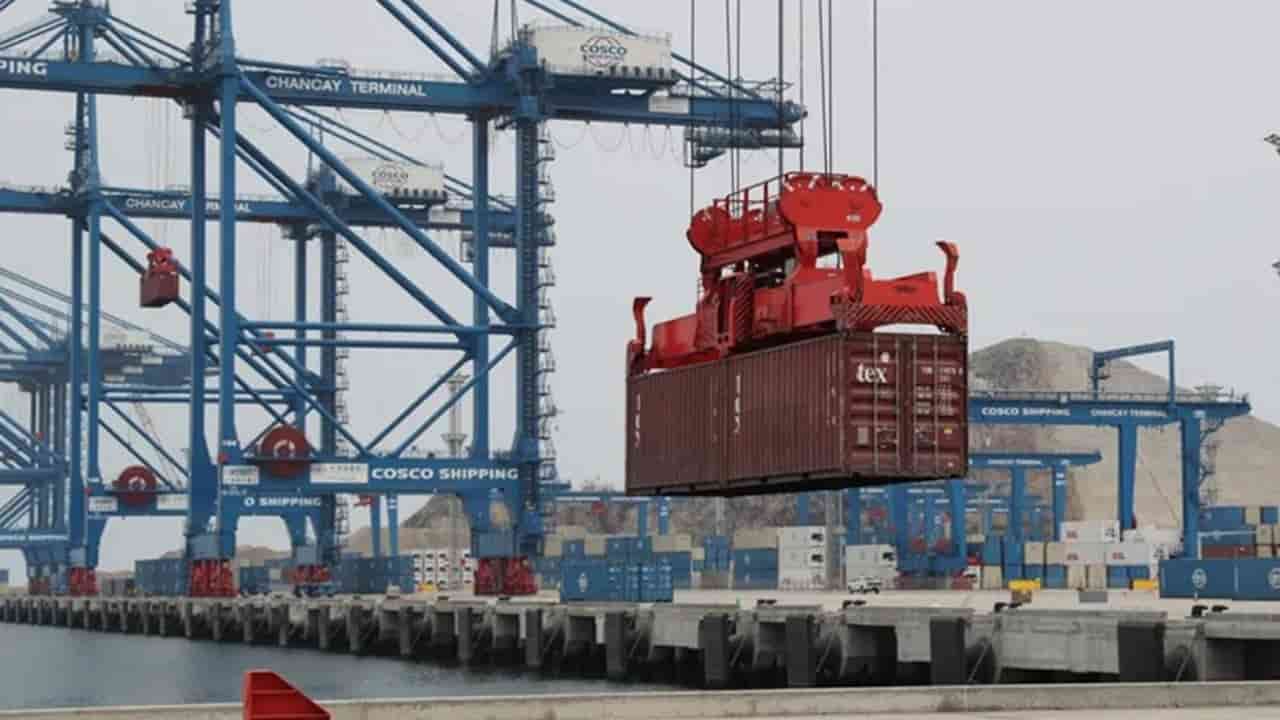
- The Chancay port, a $1.3 billion project majority-owned by Chinese shipping giant Cosco, is set to be inaugurated.
- The Chancay port is designed to be the largest deepwater port on South America's west coast.
- The Chancay port aims to cut shipping times from China by up to 20 days.
- The Chancay port project was financed with a $975 million syndicated loan from five Chinese banks.
A planned $844 million deep-water port in southern Peru has attracted significant interest from foreign investors, including Chinese companies, according to Rohel Sanchez, the governor of Arequipa. Sanchez stated that companies from the US, China, India, and Turkey have approached the regional government about the project, which is being promoted by the state investment agency Proinversion.
This new port initiative emerges as Peru prepares for the inauguration of the massive Chancay port, a $1.3 billion project majority-owned by Chinese shipping giant Cosco. The Chancay port, located 60 kilometers north of Lima, is poised to become the largest deepwater port on South America's western coast. It is expected to significantly alter global shipping patterns, potentially cutting transit times from China to South America by up to 20 days. Chinese President Xi Jinping is attending the inauguration ceremony via video link.
The Chancay project, financed by a $975 million syndicated loan from five Chinese banks, is seen by China as a key component of its Belt and Road Initiative 2.0. Chinese officials have described its potential to become the "Shanghai of South America," while Peruvian officials aim for it to be the "Singapore of Latin America." However, the development has drawn criticism from local residents in Chancay, who report a loss of fishing grounds and minimal economic benefit to the community. Concerns also linger about potential pollution and oil spills, reminiscent of a 2022 incident near the La Pampilla refinery.