Key facts
- The IMF warned that conflicts in the Middle East are deepening global inequality.
- High energy costs and technological disruptions, including AI, are contributing to slower global growth and rising prices.
- Poorer and developing nations are expected to be most affected by these instabilities.
- The IMF projects global growth of 3.1% this year and 3.4% for 2027, but notes this masks uneven performance.
- Countries dependent on oil imports and lacking competitive tech sectors face increased risk of widening income gaps.
- The war on Iran has interrupted oil and gas exports from Bahrain, Iraq, Kuwait, and Qatar, with expected output drops.
The International Monetary Fund (IMF) has warned that ongoing conflicts in the Middle East, coupled with high energy prices and rapid technological advancements like artificial intelligence, are poised to slow global economic growth and widen the disparity between wealthy and developing nations. The organization released its World Economic Outlook in Bangkok, highlighting these factors as contributors to growing global inequality.
According to the IMF, poorer and developing countries will bear the brunt of these instabilities due to their limited resources, making it harder for them to compete for essential supplies with richer economies. Kristalina Georgieva, the IMF's managing director, estimated that artificial intelligence could impact up to 40% of jobs through augmentation, downgrading, or elimination over time.
Ajay Banga, president of the World Bank, emphasized the critical link between energy security and national security in the current geopolitical climate. The IMF noted that conflicts in the Middle East have already interrupted oil and gas exports from countries like Bahrain, Iraq, Kuwait, and Qatar, projecting significant output declines for these nations. Saudi Arabia's economy is forecast to shrink by 3.3% this year, though it is expected to grow by 7.9% in 2027, a forecast made before recent attacks on Riyadh.
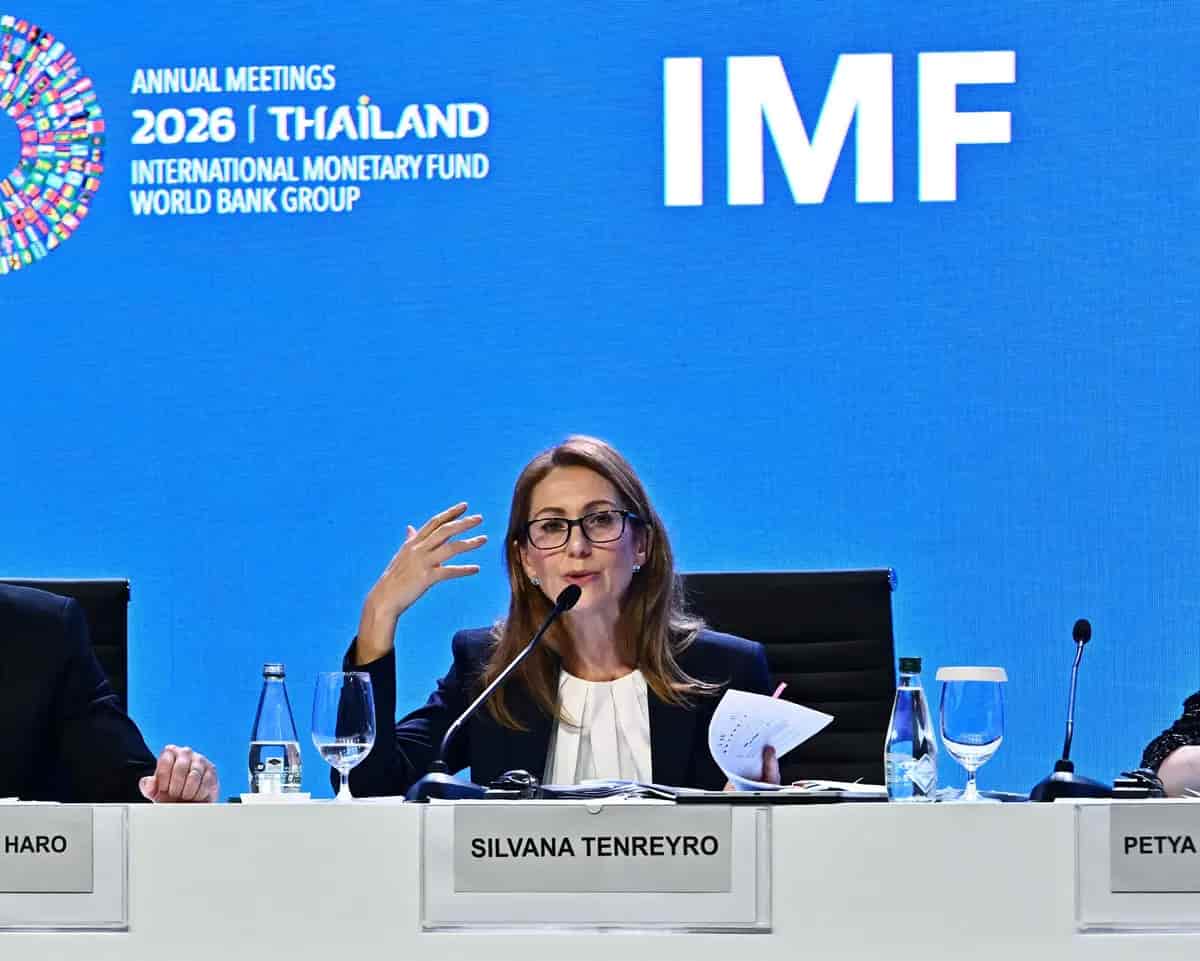
Beyond the Middle East, the IMF also cited Russia's war in Ukraine and U.S. tariffs as sources of economic instability. Silvana Tenreyro, the IMF's chief economist, cautioned that while the global economy has shown resilience, its limits are being reached, and a prolonged conflict in the Middle East could further increase inflation and slow growth. The IMF projects global growth at 3.1% for this year and 3.4% for 2027, but stressed that these figures mask significant variations across different economies. Low-income countries heavily reliant on oil imports and lacking competitive technology sectors are particularly vulnerable to these shocks.