Key facts
- Two Palestinian teenagers, Omar al-Nassan (19) and Khalil Abu Alia (16), were killed by Israeli forces in the West Bank village of al-Mughayyir.
- The killings occurred during an alleged settler attempt to steal sheep, with Israeli troops present.
- Residents and activists claim Israeli forces fired on Palestinians who resisted the sheep seizure.
- Three other students from the same al-Mughayyir school have been killed by Israeli forces or settlers this year.
- Israeli forces demolished the homes of 12 Palestinian families in Khirbet a-Taban, displacing 70 residents.
- The UN Human Rights Office for Palestine called for Israel to end its unlawful presence and evacuate settlers from the occupied West Bank.
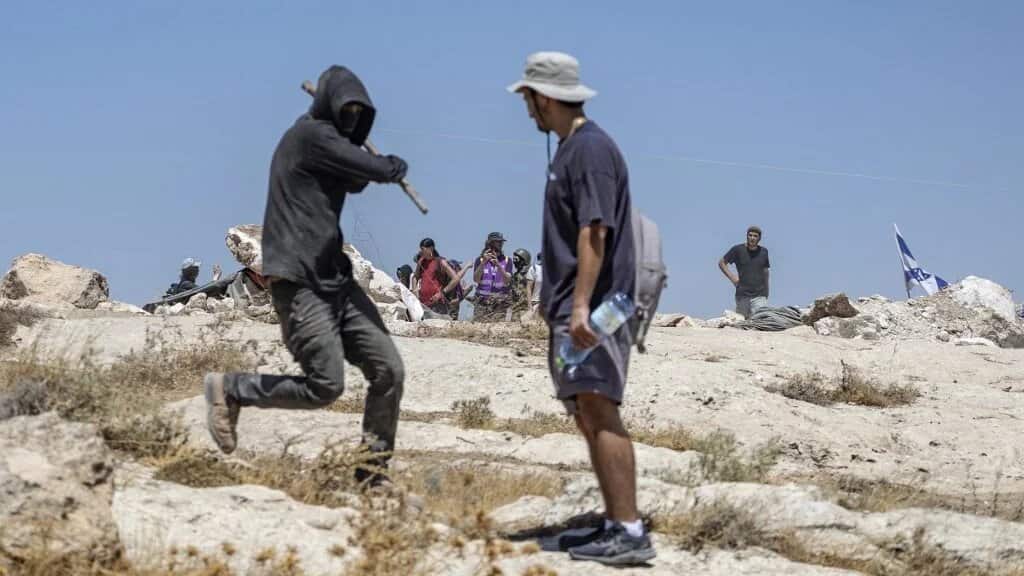
Two Palestinian teenagers, Omar al-Nassan, 19, and Khalil Abu Alia, 16, were killed by Israeli forces in the West Bank village of al-Mughayyir. The incident occurred after sunset when a group of settlers, accompanied by Israeli police and military, entered the village to seize sheep. Residents and activists reported that snipers took positions on rooftops and fired on Palestinians who resisted the seizure by throwing stones and cinder blocks. Abu Alia was shot in the neck while standing on the doorstep of his home, and Al-Nassan was shot twice, with the second shot hitting him in the back. Both died before reaching a hospital. An Israeli military spokesperson stated that forces fired at 'key instigators' to remove the threat, identifying 'hits'. The spokesperson provided no evidence of ownership or theft related to the sheep.
This incident is part of a broader surge in settler violence and Israeli military actions in the occupied West Bank. Three other students from the same al-Mughayyir school have been killed by Israeli forces or settlers this year. In a separate event, Israeli forces demolished the homes of 12 Palestinian families in Khirbet a-Taban, south of Hebron, rendering 70 residents, including 28 children, homeless. B'Tselem, an Israeli human rights group, stated that this demolition is part of an ongoing effort to erase Palestinian communities and constitutes ethnic cleansing, noting that 66 Palestinian communities have been removed since October 2023.
Cogat, the Israeli military agency, described the demolitions in Khirbet a-Taban as 'enforcement activity' against illegal construction within a designated military training zone. The area, Masafer Yatta, has been designated as Firing Zone 918 since 1981, and Israel has sought to displace its roughly 1,200 Palestinian residents for decades. Despite ongoing legal battles, demolitions continue, while illegal Israeli settlements within the same firing zone have expanded without facing removal.