Key facts
- OpenAI has launched its first branded hardware, the Codex Micro keyboard.
OpenAI has released its first branded hardware, the $230 Codex Micro, a mini-keyboard with RGB-lit keys designed to monitor and interact with its AI coding agents.
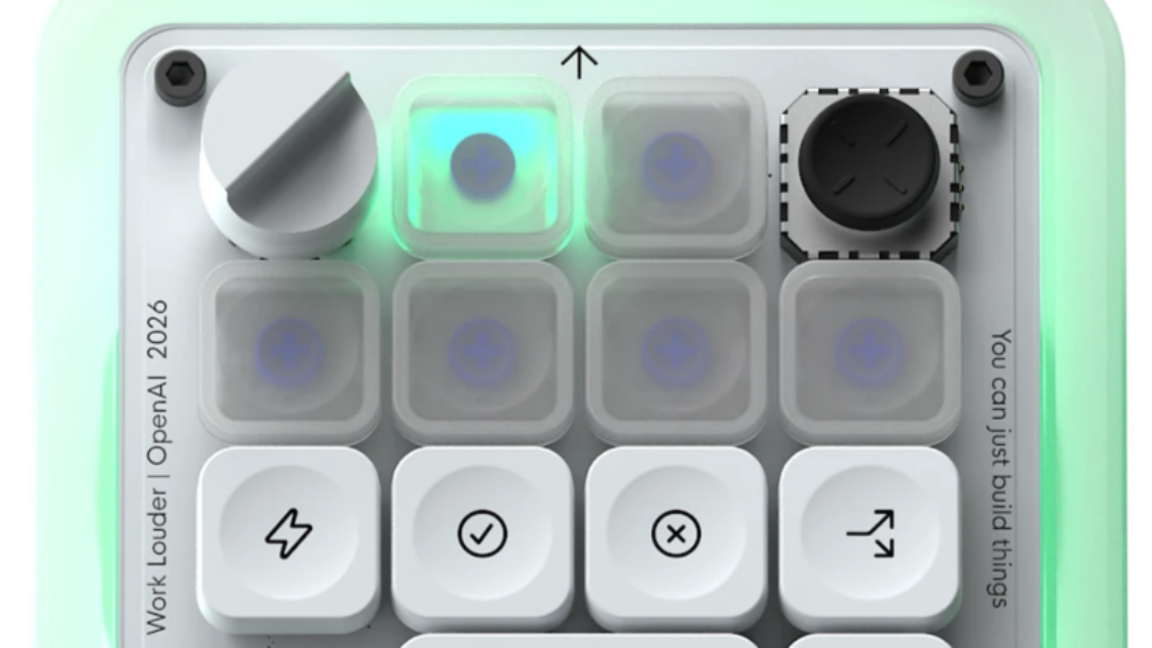
OpenAI's entry into hardware, even with a niche product like the Codex Micro, signals a broader strategy to integrate AI more directly into users' physical environments. The simultaneous legal battle with Apple over alleged trade secret theft highlights the high stakes and competitive tensions in the race to develop next-generation AI hardware.
OpenAI has officially entered the hardware market with the launch of the Codex Micro, a $230 mini-keyboard co-designed with Work Louder. This device is intended to serve as a "command center for agentic work," allowing users to monitor and interact with fleets of AI coding agents, such as those powered by Codex.
The keyboard features six "Agent Keys" with RGB lighting that display the status of AI agents through color-coding, indicating states like idle, processing, completed, requiring feedback, or error. Tapping these keys brings the corresponding agent's window to the forefront. It also includes customizable "Command Keys" for frequent actions and a dial to adjust an agent's "reasoning level"—the computational resources allocated to a task. The device is controllable and customizable via the ChatGPT desktop app.
OpenAI described the Micro as a limited-run collaboration, suggesting it is more of a novelty item. This launch comes amid more significant hardware news: a Bloomberg report detailed an unreleased OpenAI device described as a portable, screenless smart speaker with moving mechanical elements, reportedly being designed by former Apple engineers. This development is particularly notable as Apple recently sued OpenAI, accusing the company of stealing confidential information for its own hardware development, an allegation OpenAI denies.
Pick the topics you care about. Get only what matters, on your cadence.