Key facts
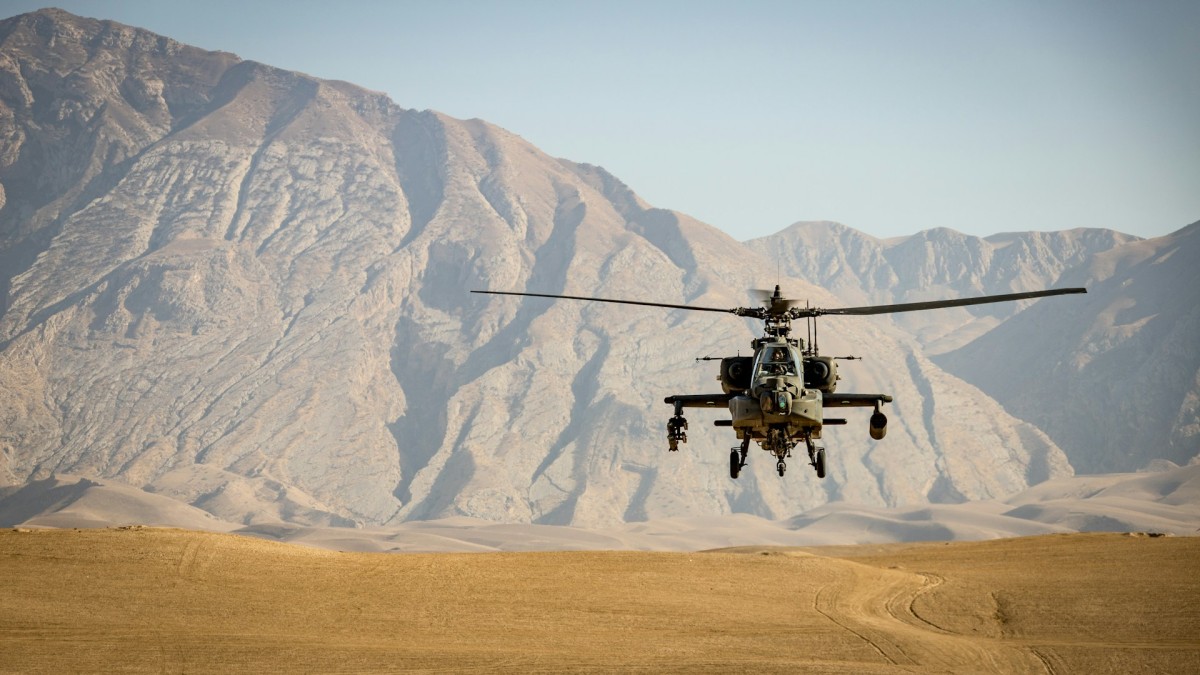
- The U.S. conducted strikes on Iranian military and surveillance sites in response to Iran downing an American Apache helicopter.
- Iran claimed to have retaliated by striking U.S. bases in Bahrain and Jordan.
- Jordan's military reported intercepting five missiles fired from Iran.
- Oil prices have fluctuated, with a recent drop attributed to hopes for a U.S.-Iran peace deal.
- A draft memorandum of understanding reportedly includes lifting sanctions and opening the Strait of Hormuz.
The U.S. announced it had carried out a series of strikes on Iranian military and surveillance sites in response to the downing of an American Apache helicopter in the Gulf. U.S. military officials stated that air defense systems, ground control stations, and radar sites were targeted near the Strait of Hormuz.
In retaliation, Iran's Islamic Revolutionary Guard Corps (IRGC) claimed to have launched strikes on 21 targets at U.S. bases, including one in Bahrain and another in Jordan. Kuwait's army also reported intercepting an attack. The U.S. described its actions as a "proportional response" to the helicopter incident, while the IRGC called the attacks "vicious."
U.S. President Donald Trump had previously accused Iran of shooting down the helicopter and stated that the U.S. "must, of necessity" respond. Reports indicated that the two crew members survived and were rescued. U.S. officials suggested Iran used a drone for the attack, though Iran has not claimed responsibility for downing the aircraft.
Amidst these escalations, oil prices have seen fluctuations. Initially, prices dropped significantly on hopes of a U.S.-Iran peace deal, with reports of a draft memorandum of understanding that could include lifting blockades and opening the Strait of Hormuz. However, the exchange of fire has introduced uncertainty regarding ongoing negotiations between the U.S. and Iran.