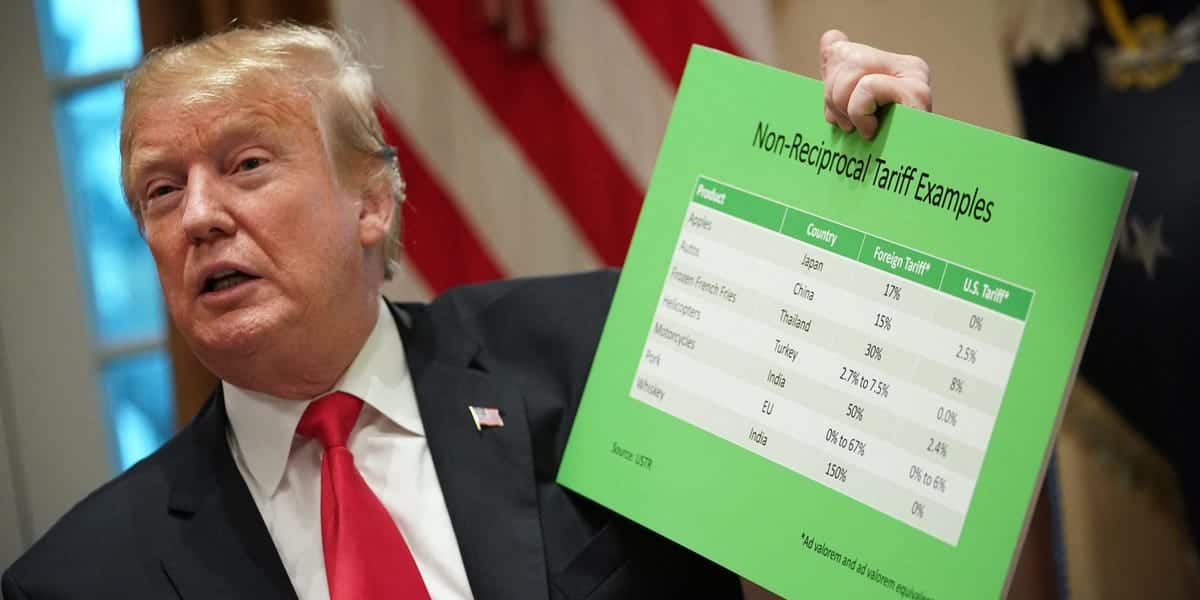
Tariffs imposed by President Donald Trump were the sole driver of inflation for many consumer goods in 2025 and early 2026, according to a new paper from the New York Federal Reserve. Fed economists examined the impact tariffs had on the prices of 67 common consumer goods, weighted by 2022 consumer spending data.
Researchers estimated that without tariffs, the prices of these goods would have dropped for most of last year and through early 2026, falling by about 1 percentage point in January and February. Tariffs' contribution to goods inflation, meanwhile, escalated for most of this timeframe. The effect tariffs had on consumer prices peaked in February of this year at around 3 percentage points, the researchers said.
Consumer goods inflation excludes service prices, such as rent, and energy inflation. However, the paper stated that goods price inflation was near its slightly negative pre-COVID average for most of 2024, before edging up late that year and then picking up through 2025, which the central bank attributed to the tariffs.
Fed researchers added that the impact of tariffs on consumer goods takes about a year to appear, citing the indirect effect of tariffs raising the cost of imported inputs, which leads producers to eventually mark up prices. The paper estimated that the total impact of tariffs on goods prices likely fell to zero by August, around six months after the Supreme Court struck down Trump's IEEPA tariffs.