Key facts
- Cleveland Fed President Beth Hammack advocates for a swift move to restrictive monetary policy.
- Hammack believes inflation pressures are broad-based, not solely concentrated in energy.
- Demand from AI buildouts is contributing to rising prices for key electronic and high-tech components.
- Hammack's staff research suggests underlying inflation is currently in the mid-to-high 2% range.
- She stated that the economy can handle tighter monetary policy to address inflation.
- Investors anticipate the Fed will maintain its policy rate between 3.75% and 4.00% at its next meeting.
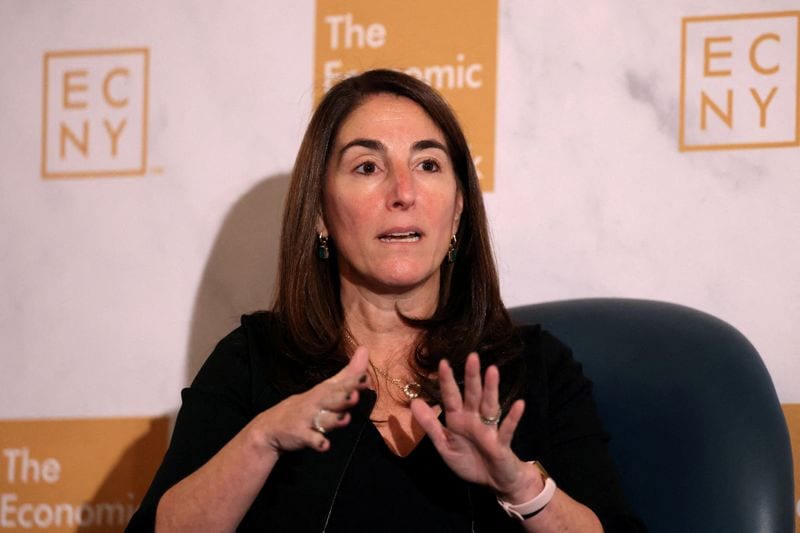
Cleveland Fed President Beth Hammack said on Monday that the U.S. central bank should move "relatively quickly" to a restrictive monetary policy stance to control inflation, which she believes has become more broad-based and is beginning to influence firms' pricing strategies. Hammack noted that while energy prices have risen, they are not the sole driver of inflation. She cited recent conversations with firms in her district that are planning price increases exceeding their rising input costs. Her remarks were prepared for delivery at a National Association for Business Economics conference. "A restrictive monetary policy stance is appropriate to ensure a timely return to 2% inflation," Hammack said. She added that it is generally preferable to make smaller, quicker adjustments rather than risk needing a larger course correction if inflation proves persistent or inflation expectations rise. Research from her staff indicates that underlying inflation is currently in the mid-to-high 2% range, and Hammack's baseline forecast is that inflation will take time to return to 2%, even with appropriate monetary policy. She also pointed to demand-side pressures from AI buildouts as a factor raising prices on key computer, electronic, and high-tech components, impacting costs for data centers, aviation, electricity production, and construction. Hammack described the current economy as capable of handling tighter monetary policy to address inflation, stating it "can handle a tighter hand on the tiller to finish the job on inflation." Investors anticipate the Fed will maintain its policy rate in the 3.75%-4.00% range at its October 27-28 meeting. Hammack, a voting member of the policy committee, has been among the more hawkish voices and dissented in favor of raising rates in July. She also stressed the importance of transparency, stating that policymakers have a responsibility to explain their decisions to consumers, businesses, and financial markets to enable better-informed planning.