Bank of Korea Governor Shin Hyun-song stated that the central bank's consecutive interest rate increases have provided time to address potential financial risks. The BOK raised its benchmark rate twice in July and August to curb inflation and stabilize markets. The South Korean economy is projected to maintain steady growth, supported by strong semiconductor exports.

The Bank of Korea's proactive stance on interest rates aims to balance inflation control with financial stability, potentially influencing South Korea's economic trajectory and its attractiveness to investors amid global economic uncertainties.
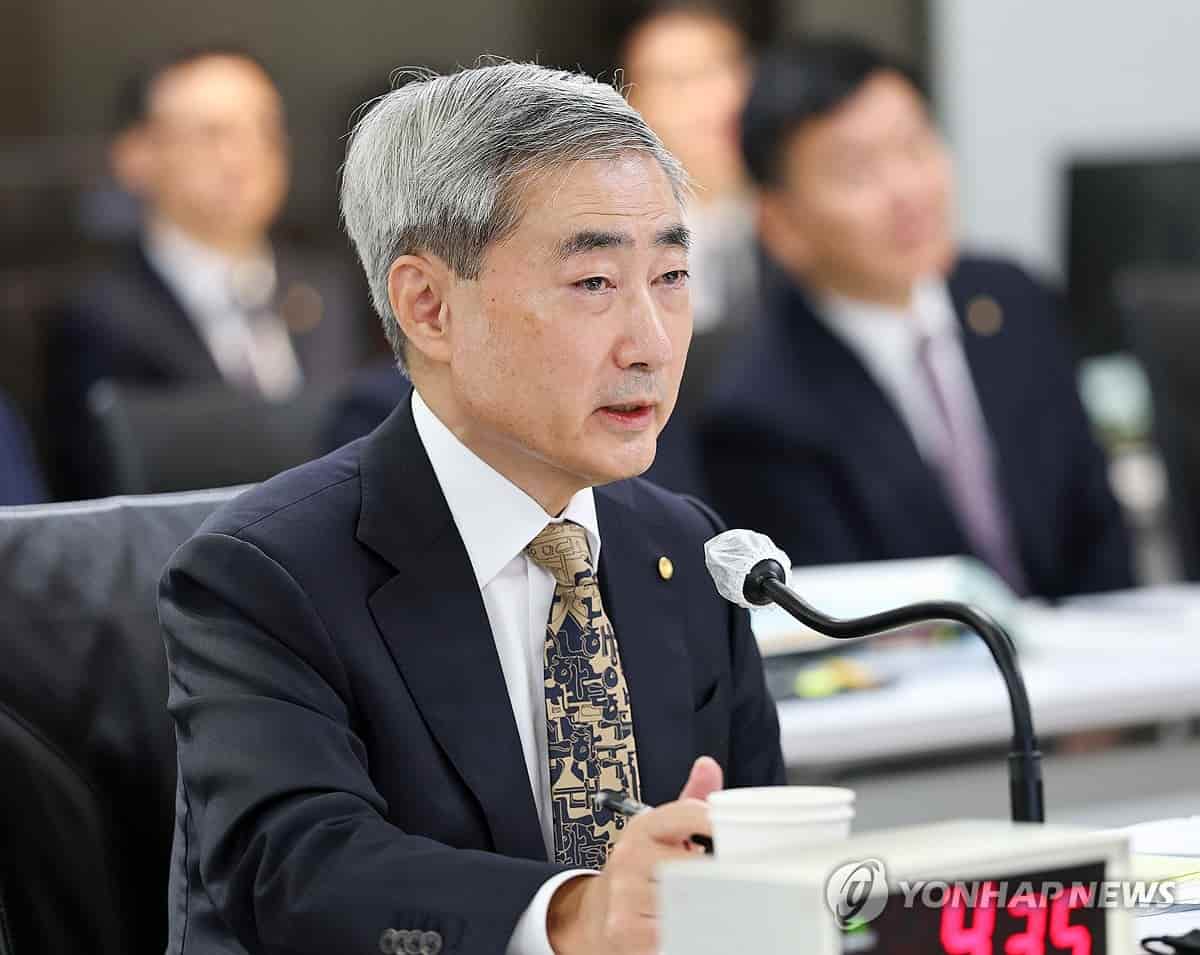
Bank of Korea Governor Shin Hyun-song said Monday that the central bank's consecutive interest rate hikes have provided it with time to act against potential financial risks. Shin stated during a parliamentary audit that the BOK's decision to raise rates earlier than other major countries has helped stabilize the market.
The BOK lifted its benchmark interest rate to 3 percent over two meetings in July and August, citing preemptive action against accelerating inflationary pressures. Shin likened the move to "A stitch in time saves nine," emphasizing the benefit of immediate action.
He also noted that yields on Korean government bonds have remained stable in recent weeks, suggesting that while rate hikes cause some pain, preemptive action ultimately reduces overall market costs.
Regarding increased payments for overseas artificial intelligence (AI) service subscriptions, Shin said the BOK will work to incorporate more accurate data into national statistics, as current data does not provide a breakdown of AI subscription fees within software copyright payments.
In a separate report submitted to the National Assembly, the BOK projected solid economic growth for South Korea, driven by strong semiconductor exports. The central bank raised its growth forecast to 3.3 percent for 2026 and 2.9 percent for 2027, expecting the positive impact of the semiconductor upcycle to spread to domestic demand, including consumer spending.
The BOK anticipates consumer prices will remain above its 2 percent target, with core inflation rising nearly 3 percent recently due to supply chain disruptions from the Middle East crisis. The bank plans to closely monitor inflation, economic trends, and financial stability to determine the timing and pace of future rate adjustments. The next BOK rate-setting meeting is scheduled for Oct. 22.
Pick the topics you care about. Get only what matters, on your cadence.