Key facts
- AI could offset demographic pressures in aging Asian economies through productivity gains, according to the IMF.
Artificial intelligence could help Asia's aging economies offset demographic pressures through productivity gains, the International Monetary Fund said. However, the IMF cautioned that equitable adoption is key to avoid widening disparities across the region.
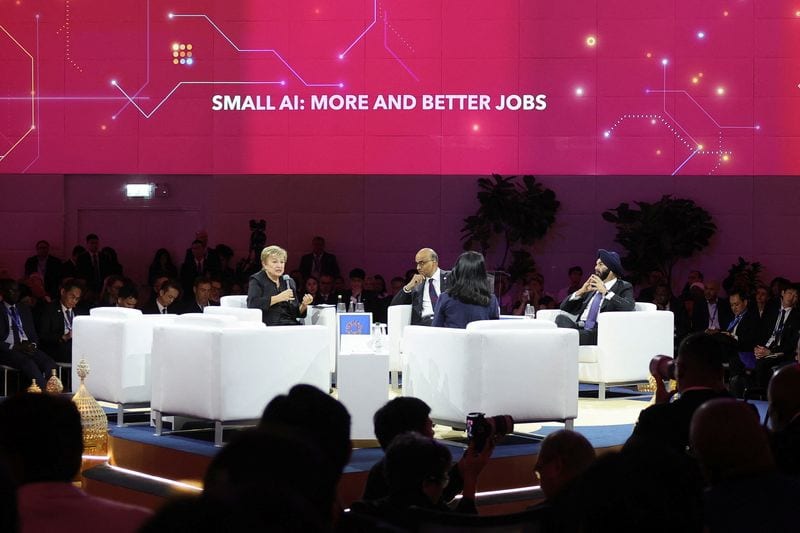
The IMF's assessment highlights a potential pathway for Asian economies to mitigate the economic impact of aging populations through AI, but underscores the critical need for inclusive policies to ensure broad-based benefits and prevent increased inequality.
Artificial intelligence has the potential to help Asia's aging economies counteract the challenges posed by a shrinking workforce, provided its adoption is widespread and equitable across the region, the International Monetary Fund (IMF) said on Monday.
IMF Managing Director Kristalina Georgieva identified AI as one of three major transformations facing Asia, alongside demography and economic integration. She stated that AI is projected to increase growth in advanced Asian economies, where populations are aging, by between 0.5% and 1%. Georgieva emphasized that if countries successfully harness these productivity and growth gains, they could more than compensate for the demographic pressures.
Research presented in a new IMF book indicates that nations such as China, Japan, and South Korea could experience a loss of nearly 25% of their working population by 2050. The IMF suggests that productivity increases stemming from AI adoption could offset this decline.
However, Krishna Srinivasan, director of the IMF's Asia and Pacific department, urged policymakers to carefully manage the benefits of AI adoption against the risk of exacerbating existing disparities among Asian countries. He noted that while advanced economies are more exposed to AI's impact, they are also better positioned to reap its benefits, whereas emerging markets face greater challenges in capturing the upside.
Srinivasan also suggested that reforms aimed at improving skills and productivity could accelerate AI adoption by more than a decade. Additionally, Georgieva mentioned that strengthening regional trade agreements and reducing non-tariff barriers could lead to a long-term increase of approximately 1.8% in Asia's GDP.
Pick the topics you care about. Get only what matters, on your cadence.